Last reviewed: June 2026 by the Shutter Envy survey team.
‘Shutter blinds’ is one of the most-searched but least-understood terms in UK window dressings. We get phone calls about it every week, and almost every caller means something slightly different. This guide untangles it — what people typically mean when they search for shutter blinds, the three products they could be talking about, and which one is actually right for the room you have in mind.
The Short Answer
When someone in the UK searches for shutter blinds, they usually mean one of three things:
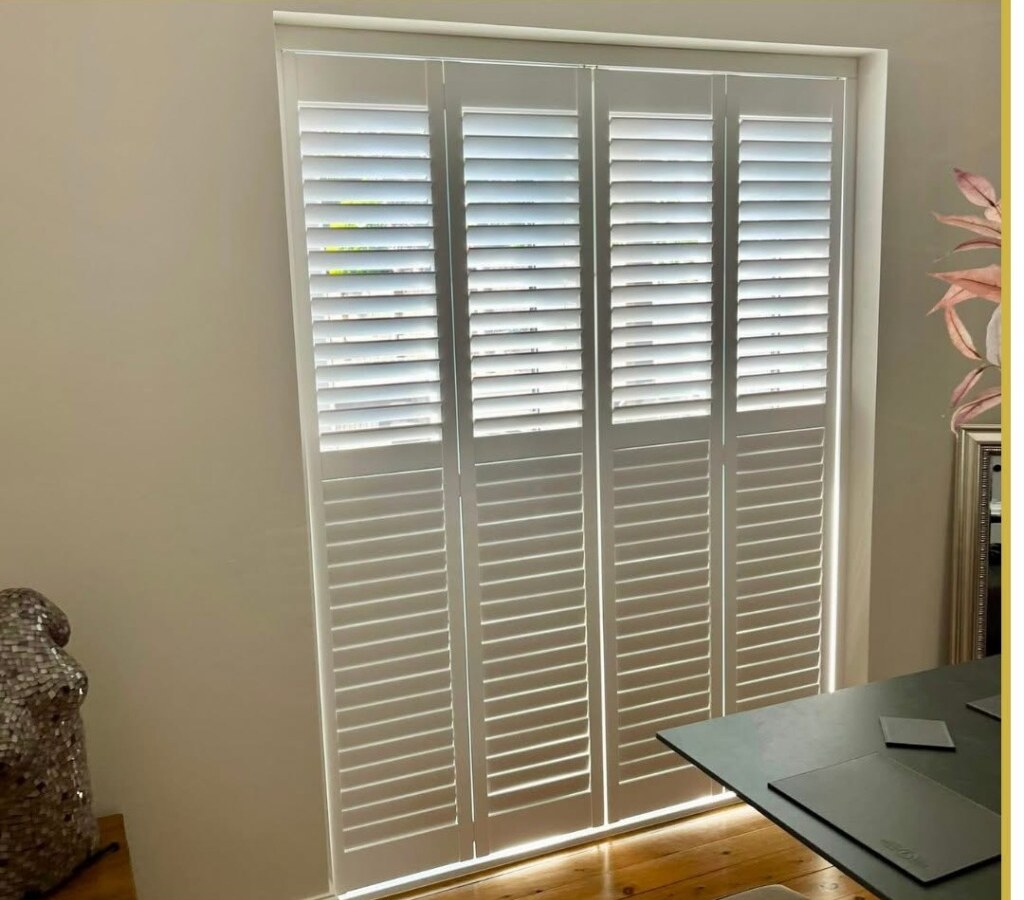
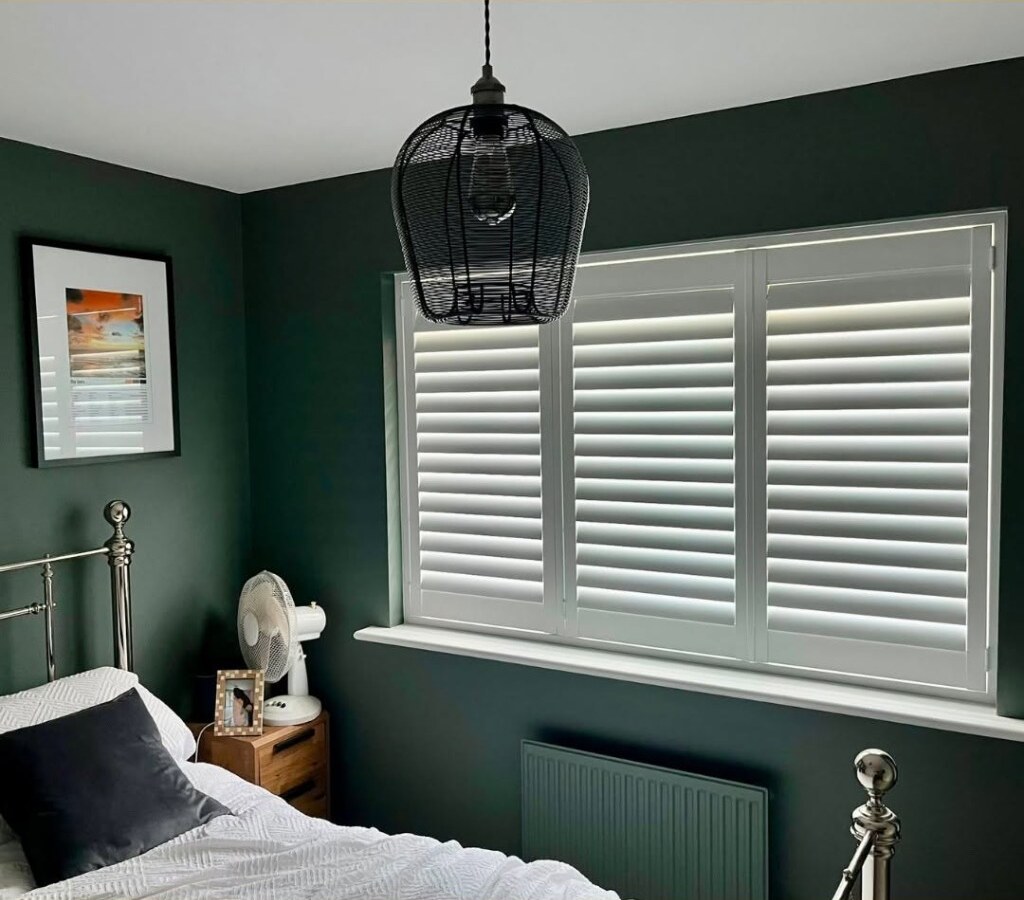
- Tier-on-tier plantation shutters — rigid louvred panels fitted into the window frame, where the top and bottom sections open independently. This is what most people picture in their head when they say ‘shutter blinds’.
- Shutter-look blinds — cellular, Roman or aluminium Venetian blinds designed to mimic the slatted look of plantation shutters at a fraction of the price.
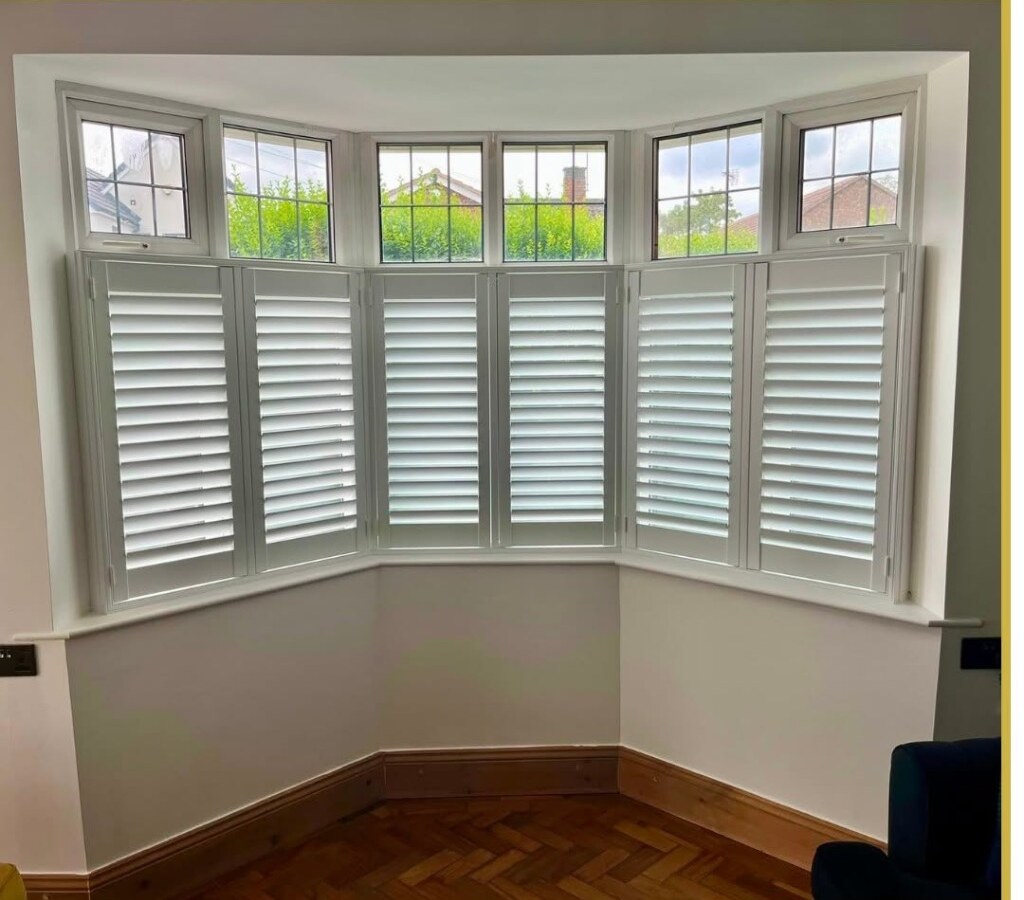
- Café-style shutters — plantation shutters that only cover the bottom half of the window, leaving the top half clear.
These three products look loosely similar in a photograph but cost, last, fit and perform very differently. The rest of this guide explains the practical differences so you can walk into a survey knowing which one you actually want.
Type 1 — Tier-on-Tier Plantation Shutters
If you’ve seen Pinterest photos labelled ‘shutter blinds’ and wondered what they really are, this is the one. Tier-on-tier is a style of plantation shutter where the window is split horizontally into a top section and a bottom section. The two sections operate independently — you can open the top to let light in while keeping the bottom closed for privacy, or open both for full view, or close everything for blackout-style coverage at night.
They are the most flexible window dressing on the UK market. They suit:
- Front-of-house living rooms in Victorian or Edwardian terraces, where you want kerb appeal but also want to read the paper without people on the pavement reading along with you.
- Bedrooms that face the street, where privacy at night matters but you’d like morning light over the bed.
- Period sash windows where the proportions of the window already split naturally into upper and lower panes — tier-on-tier mirrors that line and looks deliberate.
Tier-on-tier is the answer for around 70% of the customers who phone us asking about ‘shutter blinds’.
Type 2 — Blinds That Look Like Shutters
The other meaning of ‘shutter blinds’ is exactly the inverse: a blind designed to mimic the look of plantation shutters. The common forms are:
- Wide-slat aluminium Venetian blinds — 50mm or 89mm slats designed to read like shutter louvres at a distance. They’re lightweight and inexpensive but they hang from a head rail and gather at the top when raised — they don’t fit into the recess permanently.
- Cellular ‘shutter-effect’ blinds — honeycomb-structure blinds with a horizontal weave that suggests louvres without actually being them.
- Vertical or Roman blinds in a shutter-style fabric — usually a marketing label more than a real product distinction.
These are the right choice in three situations: you want the visual style on a budget, you’re renting and can’t commit to a fitted installation, or you’re dressing a window you plan to change soon. Expect to pay roughly £40–£120 per window versus £150–£600+ for real plantation shutters.
Be aware that the resemblance is convincing in photographs but obvious in person. If you’re buying for a long-term home, the lifetime cost of real shutters is usually lower — see the FAQs below.
Type 3 — Café-Style Shutters
Café-style shutters cover only the lower half of the window, leaving the top half clear and unframed. The name comes from continental European bistros where they were used to give diners privacy at street-level tables while still letting daylight flood the room.
They’re the right answer when:
- You want privacy at sitting-height (kitchens, dining rooms, ground-floor bay windows) but you don’t want to lose any of the daylight from above.
- The window faces directly onto a pavement or a neighbour’s house at the same level.
- The proportions of the window are tall, and you want to lighten the visual weight a full-height shutter would add.
Café-style typically costs 30–40% less than full-height shutters on the same window because it covers half the area. We’ve fitted a lot of these in Loughborough, Leicester and the surrounding villages — they’re especially popular in Victorian terraces with bay windows that face the street.
Which One Is Right for You? A Quick Guide by Room
A rough rule of thumb from years of installs across Leicestershire:
- Front living room with privacy concerns → tier-on-tier plantation shutters.
- Bedroom with street-facing window → tier-on-tier, optionally with a blackout blind behind for full darkness.
- Kitchen at the back of the house → full-height faux wood shutters or café-style if you want to keep the upper light.
- Bathroom → faux wood plantation shutters (any style — solid panel works particularly well).
- Conservatory or sunroom → full-height plantation shutters or motorised blinds; cellular blinds are a poor fit due to heat build-up.
- Rental property → shutter-look Venetian or cellular blinds; nothing fitted.
- Period home (Victorian / Edwardian / 1930s) → tier-on-tier or café-style plantation shutters; cellular blinds will feel out of place.
If you’re still not sure after reading this, ask for a free home survey — a 30-minute visit with samples in hand will resolve it faster than any guide can.
What They Cost
To put rough numbers next to each:
- Shutter-look cellular or Venetian blinds — £40–£120 per window fitted.
- Café-style plantation shutters — £100–£250 per window in faux wood, £200–£420 in real wood.
- Tier-on-tier plantation shutters — £180–£400 per window in faux wood, £350–£650 in real wood.
- Full-height plantation shutters (for reference) — £150–£350 in faux wood, £300–£600 in real wood.
Bay windows are priced per panel and usually run 2–3x a standard flat window in the same style. For the full breakdown including what drives the spread, see our plantation shutters cost guide.
Our Recommendation
Around eight out of ten customers who phone us asking about ‘shutter blinds’ end up choosing real tier-on-tier plantation shutters once they’ve seen them in person. The disappointment, when it comes, almost always comes from picking the cheaper shutter-look blind without seeing both side by side first.
If you’re anywhere in Leicestershire, the simplest next step is to book a free home survey. We bring physical samples of both real plantation shutters and shutter-look blinds, fit them temporarily against your actual window in your actual light, and you make a confident decision instead of guessing from a photograph. No pressure, no upsell, just clarity.
Frequently AskedQuestions.
Are shutter blinds the same as plantation shutters?
What's the difference between shutter blinds and Venetian blinds?
Are shutter blinds cheaper than plantation shutters?
Do shutter blinds block out light?
Can I get shutter blinds for a bathroom or kitchen?
Are shutter blinds easy to clean?
How long do shutter blinds last?
Need advice for your own bedroom windows?Arrange a home visit →