Last reviewed: November 2026.
A Venetian blind is the made-to-measure option we specify when a room needs precise light control and a timber or timber-look finish, without jumping straight to shutter panels. Tilt the slats for daytime privacy. Raise the blind when you want the glass clear. That is the whole idea.
This guide is for homeowners in Leicester, Loughborough and Leicestershire. It covers real wood versus faux wood, privacy slats and tapes, where Venetians earn their place, and what we check before anything is ordered.
The Short Answer
- Venetian blinds suit living rooms, kitchens, studies and many bedrooms.
- Tilt the slats for light and privacy; raise the blind to clear the window.
- Real wood for a dry room and a timber finish. Faux wood where moisture or wipe-clean matters.
- A privacy slat closes more tightly than a standard slat. It is not full blackout on its own.
- Decorative tapes are optional — matching or contrasting — and change the look more than the price alone suggests.
- Plan on about £130–£220 fitted for a standard window. See the blinds cost guide.
- A front bay still looks better in shutters. A Venetian is the blind to choose when you want tiltable slats on a mid budget.
What a Venetian Blind Is
Our blinds range includes roller, Venetian, honeycomb, duo roller and vertical. A Venetian is the horizontal-slat blind. You may also hear people say “wood blinds” when they mean a timber or faux-wood Venetian.
Each slat hangs from a headrail. Tilt them open for a view and daylight. Close them for privacy. Raise the whole stack when you want the sill clear for plants, a desk or cleaning. That tilt control is why Venetians often beat a plain roller in a living room or study, and why they feel closer to plantation shutters than a fabric drop does — without hinged panels.
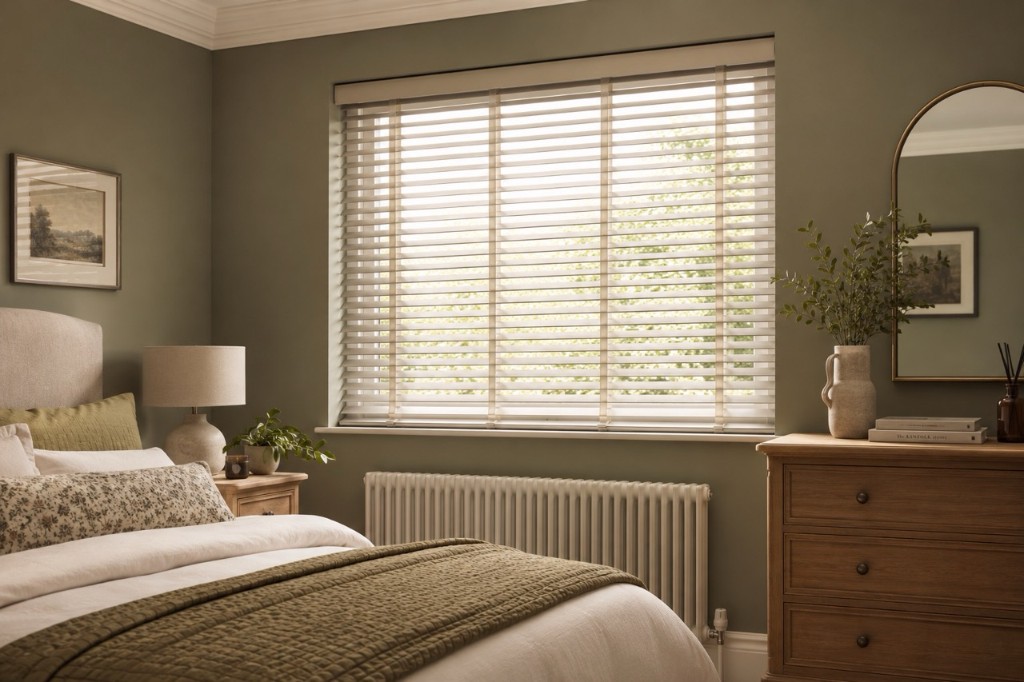
This is a wood-look Venetian with decorative tapes and a matching valance in a bedroom recess. The slats are tilted open so daylight still enters. On a survey we bring finish samples, including stained and painted real wood and faux wood, rather than asking you to judge colour from a photo alone.
Real Wood or Faux Wood
| Where the window sits | Better starting point | Why |
|---|---|---|
| Dry living room or study | Real wood | Stains and painted timber finishes sit well with furniture |
| Kitchen, utility or bathroom | Faux wood | Handles moisture and wipe-downs better than timber |
| Street-facing bay you want to keep for years | Plantation shutters | Follow the bay shape; no fabric or cord to replace |
| Cold pane or loft that needs a warmer blind | Honeycomb | The cell holds air in a way a slat stack does not |
| Simple open-and-close fabric on a budget | Roller | Usually the lower price for a standard window |
Real wood is the finish people mean when they want grain and a furniture-quality look. It belongs in dry rooms. Steam from a hob, a shower or a poorly ventilated utility will fight a timber blind over time.
Faux wood is the practical everyday Venetian for Leicestershire kitchens and wetter rooms. The clean cut and finish wipe down easily, and you still get the tilt control. Our kitchen shutters guide covers the shutter route when the window faces the street and you want panels instead of slats.
Privacy Slats, Tapes and Motorisation
A privacy slat is shaped to close more tightly, so less of the outside world shows through when the blind is shut. That helps on a street-facing lounge or a ground-floor study. It does not seal the edges of the reveal. If you need near-blackout for sleep, compare a blackout honeycomb or shutters with a blackout blind rather than expecting a Venetian alone to darken the room fully.
Decorative tapes — matching or contrasting — run down the face of the slats and change the look from a plain ladder cord to something more deliberate. They are a style choice. Ask to see them next to the finish sample before you order, because they read differently in daylight and under artificial light.
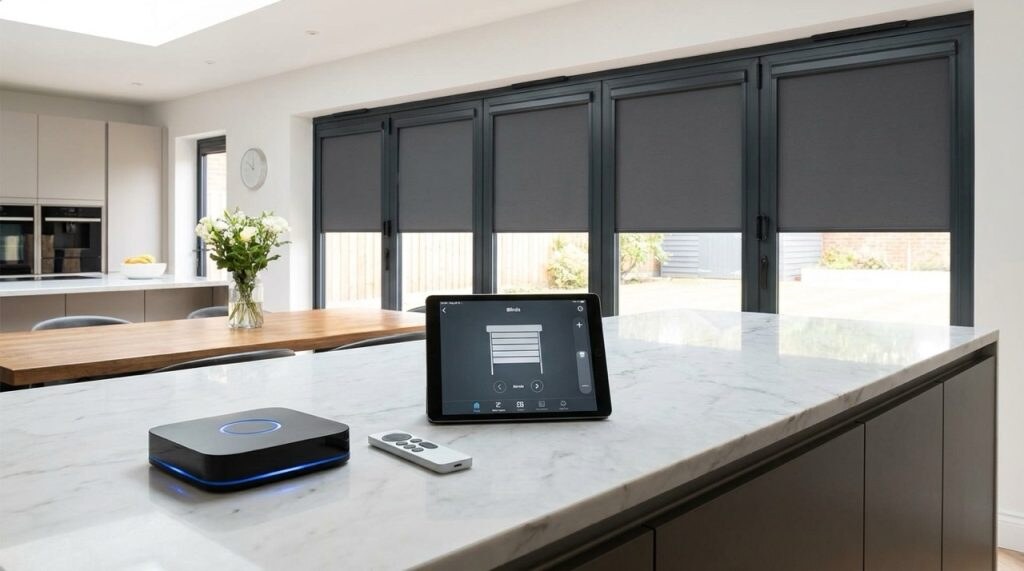
Motorisation is available on our Venetian products. Remote, app or voice control suits tall windows, wide openings and rooms where a long cord is the wrong answer. Our child-safe guide covers why cords matter, and blind motorisation covers the control options across the range.
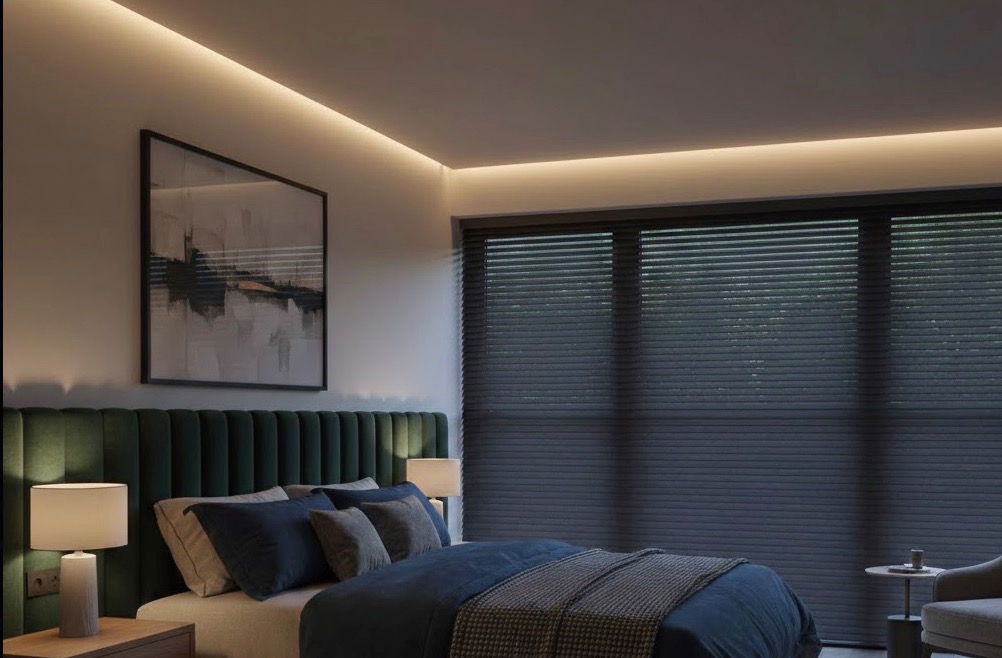
A darker, closed finish suits a bedroom that needs privacy after dark. Light can still show between the lines when the blind is shut — that is normal for horizontal slats. For the strongest sleep close, talk through blackout fabric systems or shutters on the survey rather than relying on tilt alone.
Where Venetian Blinds Earn Their Place
- Living rooms and studies, when you want to cut glare on a screen without dropping the room into darkness.
- Kitchens, usually in faux wood, so steam and wipe-downs are less of a fight.
- Bedrooms, when privacy and a timber look matter more than pitch-black sleep.
- Home offices, where tilt control beats a single roller fabric for video calls and screen glare.
- A mid-budget street window that is not a showpiece bay — tiltable slats without shutter panels.
Wide bifold doors are a different job. The blind has to clear the doors when they fold. Start with our motorised blinds for bifold doors rather than treating a window Venetian as the same product.
When a Roller, Honeycomb or Shutters Fit Better
| The brief | Better starting point |
|---|---|
| Lowest cost, simple open and close | Roller blind |
| Warmer pane, top-down bottom-up privacy | Honeycomb blind |
| Striped fabric that shifts from private to see-through | Duo roller |
| Front bay, period window, finish you want for years | Plantation shutters |
| Tall landing over the stairs | Shutters, so nothing hangs on a cord |
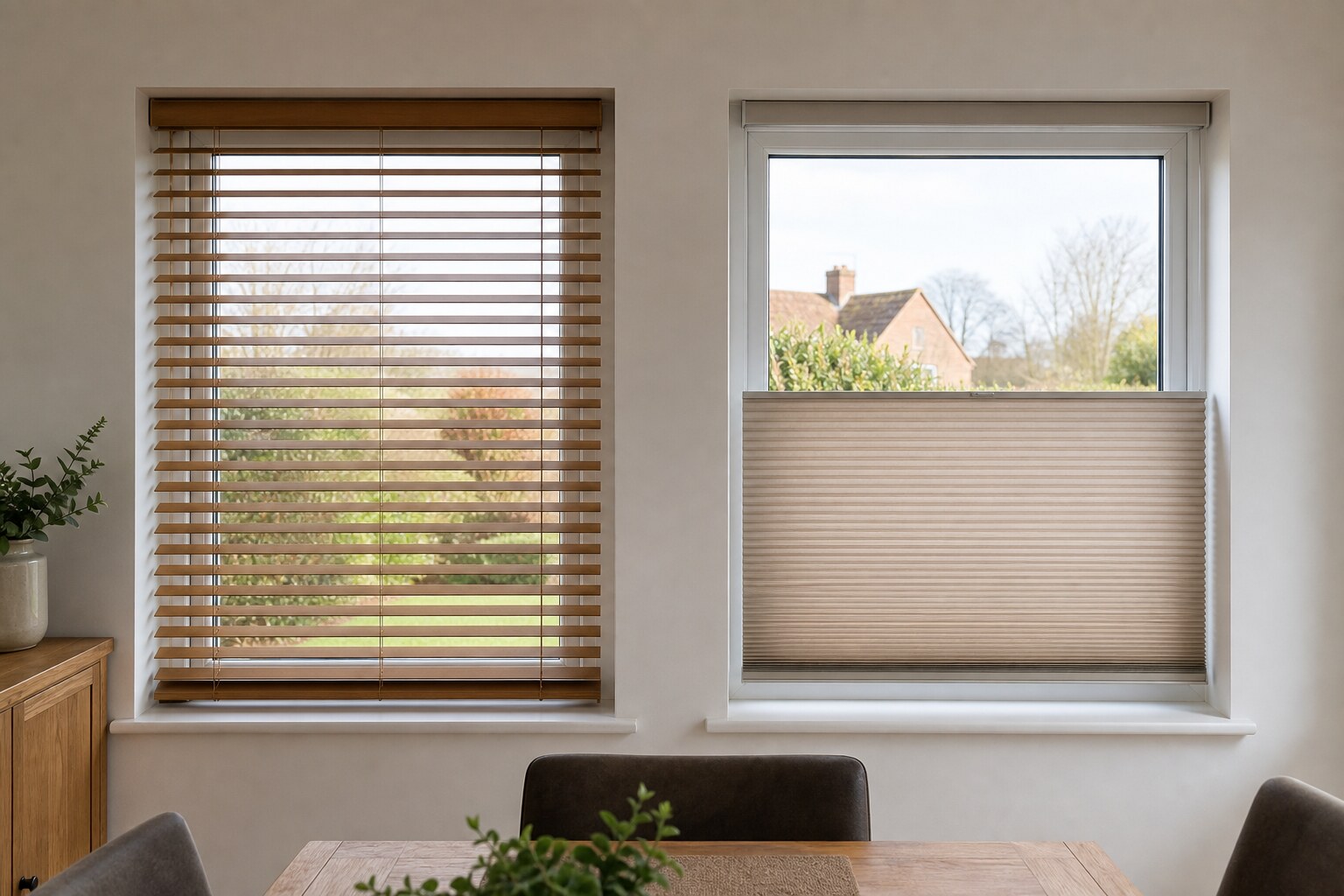
Side by side, the difference is clear. The Venetian (left) tilts for a view through the slats. The honeycomb (right) sits lower for privacy while leaving daylight above — a different job. Our shutters versus blinds comparison puts both against shutters when the front of the house is the priority.
What It Costs in 2026
For a standard window, a made-to-measure faux-wood or wood Venetian commonly sits around £130–£220 fitted. That is the planning range in our blinds cost guide, which also prices rollers, honeycomb, duo rollers and motorised rollers.
Three things move a Venetian above that band:
- A wide or tall opening, because of the extra slat weight and headrail
- Premium real wood finishes and decorative tapes
- Motorisation, by remote, hub or voice
We quote after measuring. Two windows that look the same from the kerb often differ once the reveal, the handles and the finish are on the survey sheet.
What We Check on a Survey
- Reveal depth and shape, so the headrail and valance sit properly
- Which way the window opens, so the slats clear the handle and the sash or casement
- Moisture and which room it is, so we specify real wood or faux wood honestly
- How tightly you need the close, standard slat or privacy slat
- Whether tapes suit the room, matching or contrasting, next to the actual finish
- Who can reach it, which is what pushes a tall or awkward window towards motorisation
- Children in the room, because a dangling cord is the wrong default
Book a Survey
Shutter Envy measures, supplies and fits Venetian blinds across Leicester, Loughborough, Melton Mowbray, Market Harborough and the surrounding villages. Bring the room you are stuck on. We will show wood and faux wood samples, including privacy slats and tapes, and say plainly if a roller, honeycomb or shutters suit that window better.
Book a free home visit for a fitted quote.
Frequently AskedQuestions.
What is a Venetian blind?
Are wood or faux wood Venetian blinds better?
What is a privacy slat on a Venetian blind?
Can you motorise Venetian blinds?
How much do Venetian blinds cost in the UK?
Are Venetian blinds or shutters better on a bay window?
Do you fit Venetian blinds in Leicester and Loughborough?
Need advice for your own bedroom windows?Arrange a home visit →