Last reviewed: October 2026.
If you have young children, grandchildren who visit, or a baby on the way, window coverings deserve more thought than colour and fabric. Most blinds and shutters are perfectly safe — but looped cords and chains are a genuine hazard for small children, and they are easy to overlook in a room you see every day.
This guide covers what we recommend on surveys across Leicester, Loughborough and Leicestershire: the cord-free options, what the UK rules actually say, how to get a nursery dark enough to sleep, and what to do about older blinds already in the house.
The Short Answer
- The hazard is cords and chains, not blinds or shutters as such.
- Plantation shutters have no cords at all — they are the simplest cord-free choice for bedrooms and family rooms.
- Motorised blinds run from a remote, app or switch, so nothing hangs down.
- Wand-operated blinds swap cords for a rigid rod — a lower-cost cord-free option on some ranges.
- Corded blinds must have safety devices fitted correctly — that is the installer’s job, not an optional extra.
- For nurseries, safety and darkness are separate questions — shutters solve the first; a blackout layer often solves the second.
Why Cords and Chains Are the Risk
Young children are curious, climb on furniture and do not understand that a loop of cord can tighten. A long chain beside a cot, bed or sofa is within reach in a way adults rarely notice, because we are looking at the window, not at what hangs below it.
That is why the advice from the safety bodies is consistent: remove the loop, or secure it out of reach. Everything else in this guide is a way of doing one or the other.
What the UK Rules Say
Since 2014, internal blinds sold in the UK must meet the child-safety requirements in BS EN 13120. In practice that means a new blind is either:
- Safe by design — no accessible looped cord or chain in the first place, or
- Supplied with child-safety devices — cleats, chain tensioners or breakaway connectors that keep cords secured or stop a loop forming.
Crucially, the installer is responsible for fitting those devices where they are needed. A blind delivered in a box with a safety device still in the packet does not meet the intent of the rules.
The British Blind and Shutter Association runs the Make It Safe campaign to spread the same message. Shutter Envy is a BBSA Accredited Specialist, and we follow that guidance on every survey.
Cord-Free Options, From Simplest to Most Flexible
1. Plantation shutters
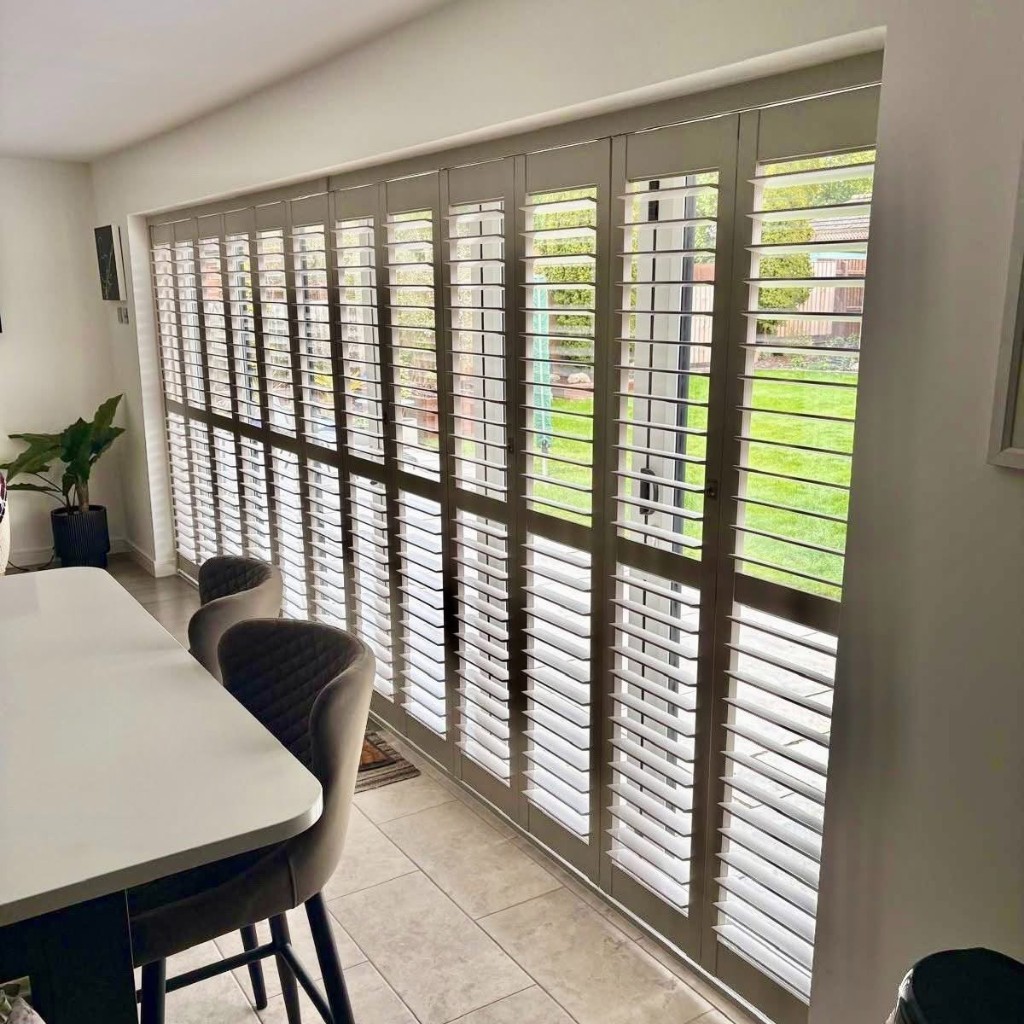
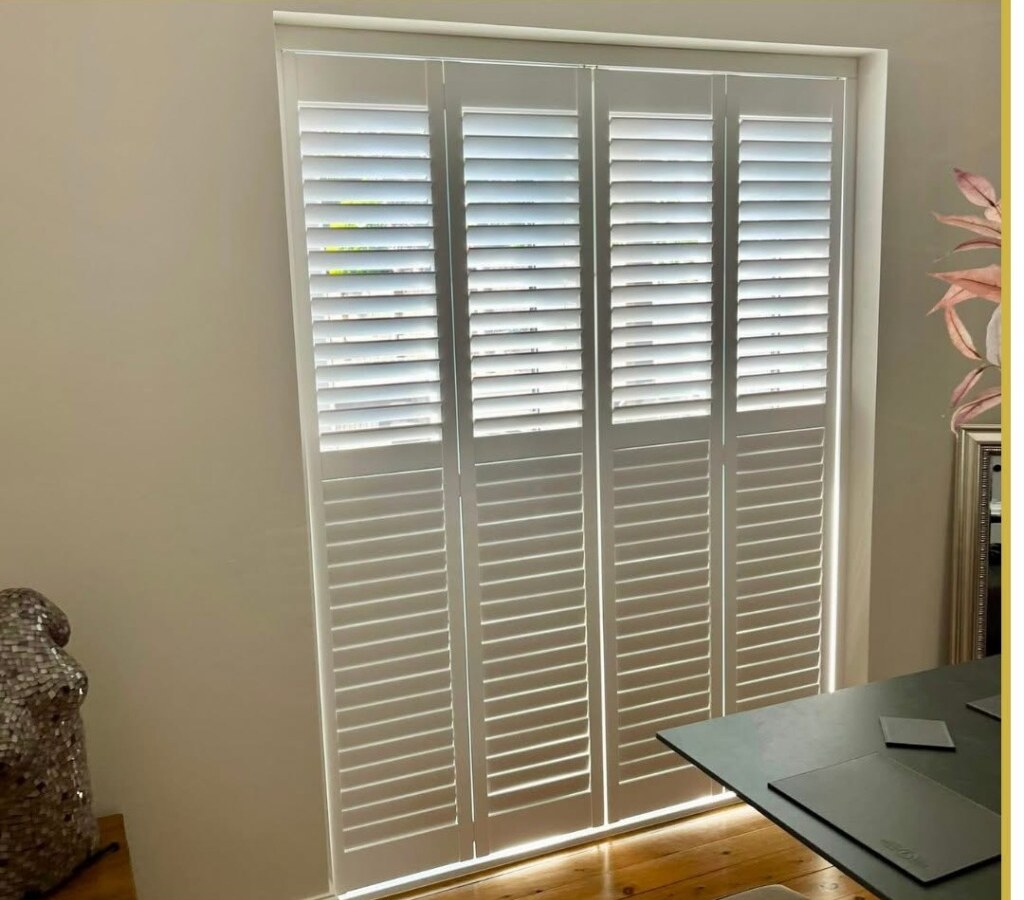
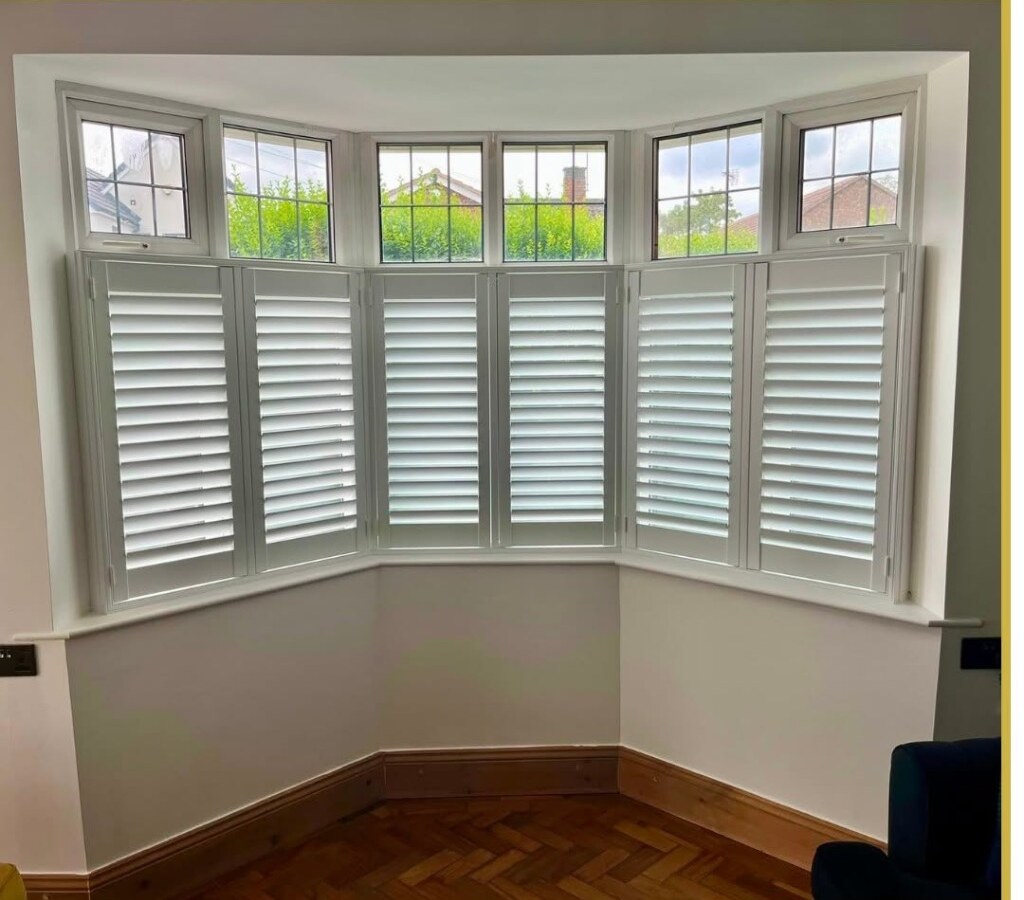
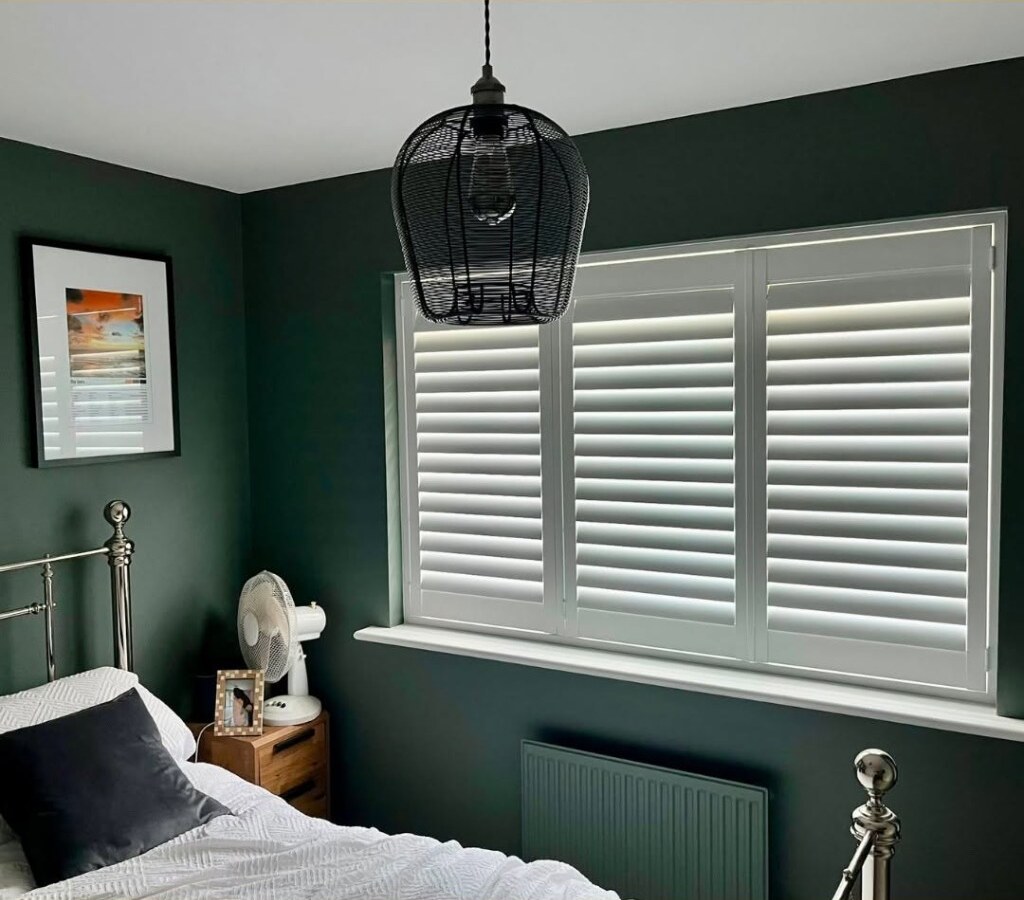
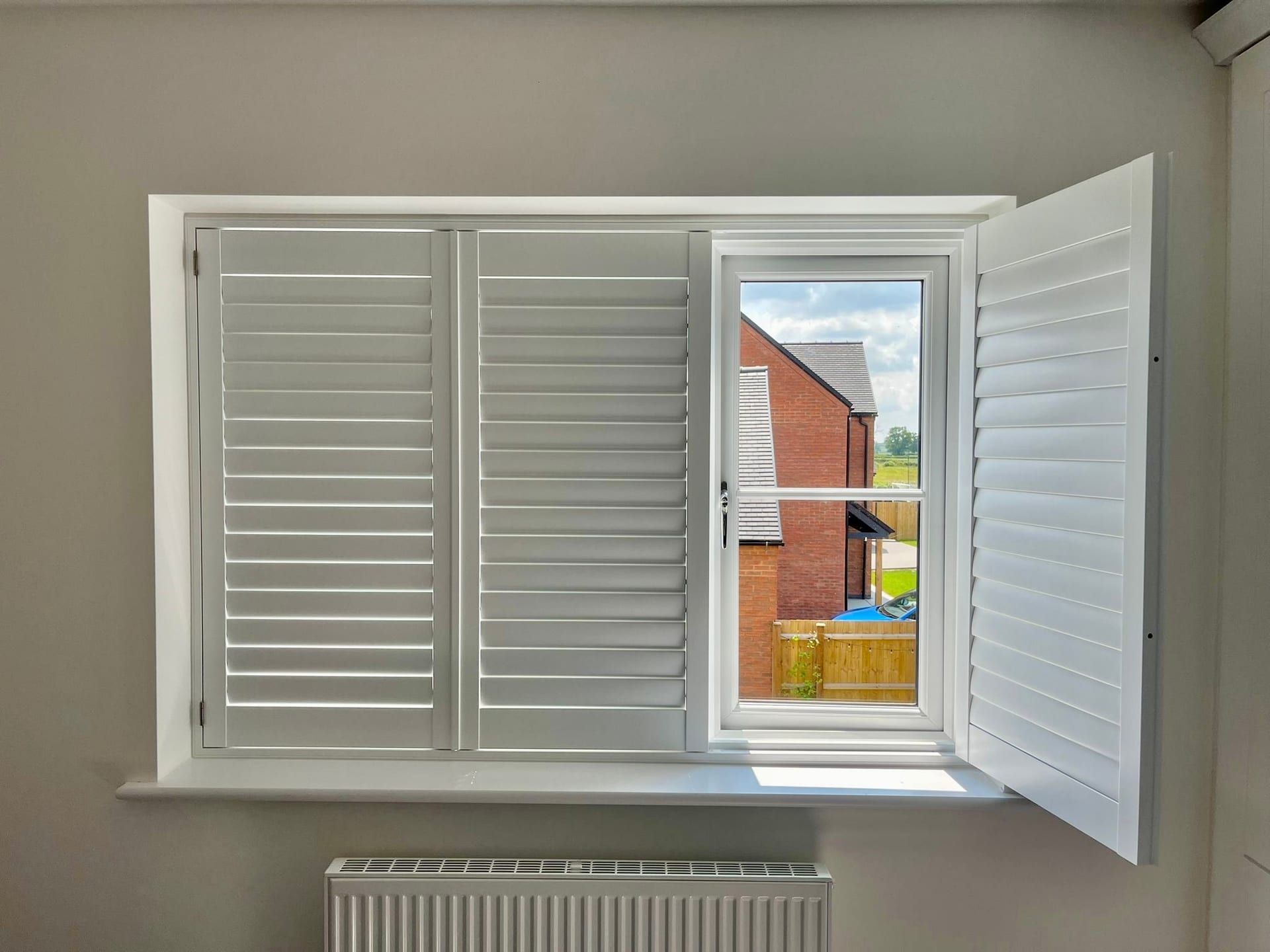
Plantation shutters are hinged panels fitted into a frame inside the window reveal. You tilt the louvres by hand and open the panels like small doors. There are no cords, chains or loops anywhere.
They also suit busy family homes for other reasons: they wipe clean, there is no fabric to pull down, and they last for many years. For most children’s rooms we recommend faux wood shutters — durable, moisture-resistant and good value.
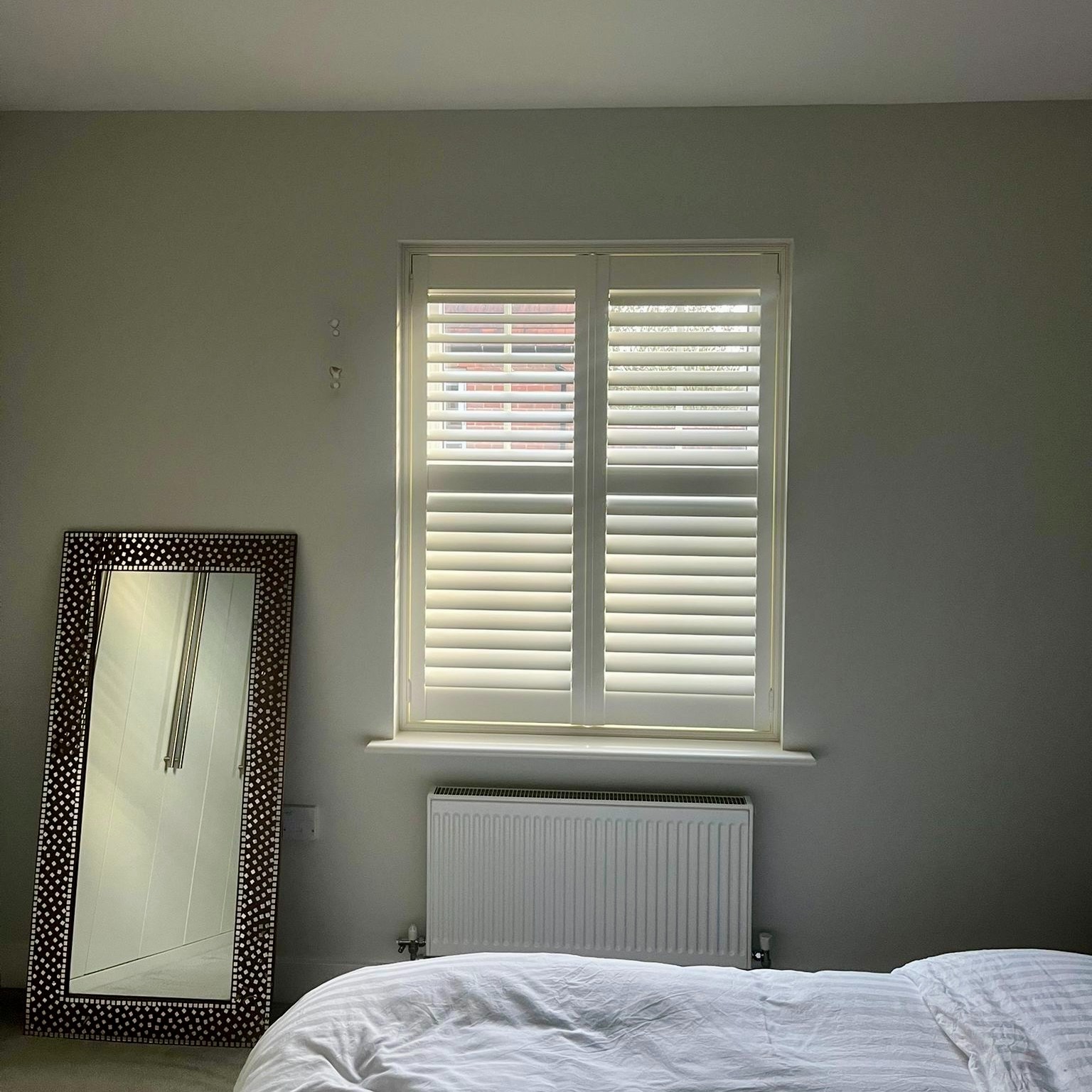
Split tilt or a tier-on-tier layout lets you close the lower louvres for privacy while the top stays open for daylight — handy in a child’s room that faces the street or a neighbouring house.
2. Motorised blinds
Motorised blinds are raised and lowered by remote, phone app, voice assistant or schedule. With nothing hanging down, they are a strong choice for:
- Tall windows and stairwells, where a manual blind would need a very long chain.
- Rooms where furniture has to sit near the window, such as a small bedroom.
- Families who want blackout fabric on a roller blind without any cord.
Rechargeable battery motors mean most homes need no rewiring. Motorisation is available across most of our blind ranges, including rollers.
3. Wand-operated blinds
On some blind ranges, a rigid wand replaces the cord or chain. It is a lower-cost cord-free option where motorisation is not in the budget. We will tell you on survey which ranges and sizes can be specified this way — it varies by product and window size.
4. Corded blinds with safety devices — fitted properly
Corded blinds are not banned, and in some rooms they remain sensible. The non-negotiable is that the safety devices are fitted, secured and at the right height, and that cords are not left loose or tied together. If a blind with a cord or chain is going into a child’s room, we will usually suggest one of the cord-free options above instead.
Nurseries and Children’s Bedrooms: Safety and Darkness
Parents usually want two things from a nursery window: no hazards and enough darkness for daytime naps. They are different problems.
- Safety: shutters or motorised blinds remove cords completely.
- Darkness: shutters make a room much darker when closed, but light can still edge around the panels and between the louvres. If your child needs near-total darkness in a bright south-facing room, add a blackout layer or choose a dedicated blackout system.
Our blackout shutter guide explains how dark shutters really get, and the BlindScreen vs shutter louvres blackout demo shows the difference side by side. For wider bedroom advice, see our bedroom shutters guide.
Whatever you choose, the standard advice still applies: keep cots, beds and climbable furniture away from windows.
Are Shutters Completely Child-Proof?
Nothing in a home is completely child-proof, and we would rather be honest about it. Shutters remove the cord hazard, but a few practical points are worth knowing:
- Hinges and closing panels can catch small fingers, just like a cupboard door.
- Louvres are sturdy but not climbing frames — teach children not to hang on panels or pull louvres.
- Windows must still open. Shutters are hinged, so they swing clear and the window behind can open fully — important for ventilation and, on upper floors, for escape.
- Window restrictors stay usable. On survey we check that panels clear handles and restrictors so you never have to choose between a shutter and a safety catch.
What to Do About Older Blinds in the House
Many families move into homes with blinds already fitted. A quick check, room by room:
- Look for loose loops — any cord or chain that hangs in a loop and is not secured.
- Check for safety devices — a cleat on the wall, a chain tensioner fixed at the bottom, or a breakaway connector on the cord.
- Check the height — cords should be secured well out of a child’s reach, not tucked behind a bedside table.
- Decide: secure or replace. If the blind is in good condition, a correctly fitted safety device may be enough. If it is worn, the device is missing, or it is in a child’s bedroom, replacing it with a cord-free option is usually the better answer.
We are happy to look at existing blinds while we are surveying for new shutters or blinds.
Quick Room-by-Room Guide
| Room | Our usual recommendation |
|---|---|
| Nursery / child’s bedroom | Shutters or motorised blinds, plus a blackout layer if naps matter |
| Family living room | Shutters — no cords, wipe-clean, privacy on street-facing bays |
| Kitchen and bathroom | Faux wood shutters or waterproof options; no fabric to pull down |
| Tall windows and stairwells | Motorised blinds — avoids a long hanging chain |
| Bifold and patio doors | Tracked shutters or door-mounted systems, specified to clear handles |
For doors, our tracked shutters guide and motorised blinds for bifold doors guide cover the detail.
What We Check on a Home Survey
When children are part of the brief, we look at:
- Which rooms need cord-free — usually every bedroom and any room where children play.
- Furniture placement — where cots, beds and sofas sit relative to each window.
- Window operation — handles, restrictors and opening direction, so shutters swing clear.
- Light needs — whether a nursery needs a blackout layer as well as shutters.
- Budget across the house — often shutters on the front and family rooms, motorised or wand-operated blinds elsewhere.
Cost Pointers
Cord-free does not have to mean expensive. Shutters cost more than blinds upfront but last far longer; motorised blinds sit between the two. For realistic 2026 ranges, see our plantation shutters cost guide and made-to-measure blinds cost guide. Your fitted price is confirmed after a free survey.
Book a Free Home Survey
If you want child-safe blinds or shutters in Leicester, Loughborough, Melton Mowbray, Market Harborough or nearby villages, the next step is a home visit. Mark measures every window, talks through cord-free options room by room and leaves a fitted quote — no pressure and no guesswork.
Frequently AskedQuestions.
What are the most child-safe window coverings?
Are plantation shutters safe for children's bedrooms?
What are the UK rules on blind cords?
Are shutters dark enough for a nursery?
Can you make my existing blinds child-safe?
Are motorised blinds worth it for child safety?
Do you fit child-safe blinds and shutters in Leicester and Loughborough?
Need advice for your own bedroom windows?Arrange a home visit →