Last reviewed: October 2026.
A sash window is two sliding halves, not a side-hung casement. The meeting rail, the cords and the depth of the box all change how a shutter should be made. Sash window shutters work well on that layout — privacy at sitting height, daylight above, and a rail that lines up with the window — provided the panels are measured to the opening.
This guide covers what we recommend on surveys across Leicester, Loughborough and Leicestershire villages: tier-on-tier versus full-height, how the rail should sit, realistic 2026 costs, and when the window itself needs attention before any shutter is ordered.
The Short Answer
- Yes — most sash windows take made-to-measure shutters.
- Tier-on-tier is the default: it echoes the two sliding sashes.
- Line the shutter rail up with the meeting rail so the window still looks like a sash from inside and from the street.
- Full-height with a midrail is the alternative when you want one set of panels rather than two.
- The sash must still open. Panels fold back clear of the catches and the lower sash.
- Shutters do not repair the window. Failed cords, rotten timber and single glazing are a joiner’s job first.
- Price a tall sash toward the top of a standard window range, and a pair as two openings. See our plantation shutters cost guide.
Why a Sash Needs Its Own Spec
Cottage window shutters are usually about a small, deep casement. A living-room casement is about sofa-height privacy on a wide pane. A sash is taller, it slides, and it has a horizontal meeting rail that the eye expects to see.
Typical issues on Leicestershire period houses — Victorian and Edwardian terraces, and village houses with original or replacement sashes:
- The meeting rail sits part-way up. A shutter rail in the wrong place makes the window look cut in half.
- The reveal is often out of square, especially where the box and the plaster have moved.
- Cords, weights and staff beads live in the frame. The shutter build-up has to leave them alone.
- The lower sash still needs to lift for ventilation. Panels that only tilt, and never fold clear, get in the way.
- Draughts are common. A shutter softens them. It does not replace glazing or a sash repair.
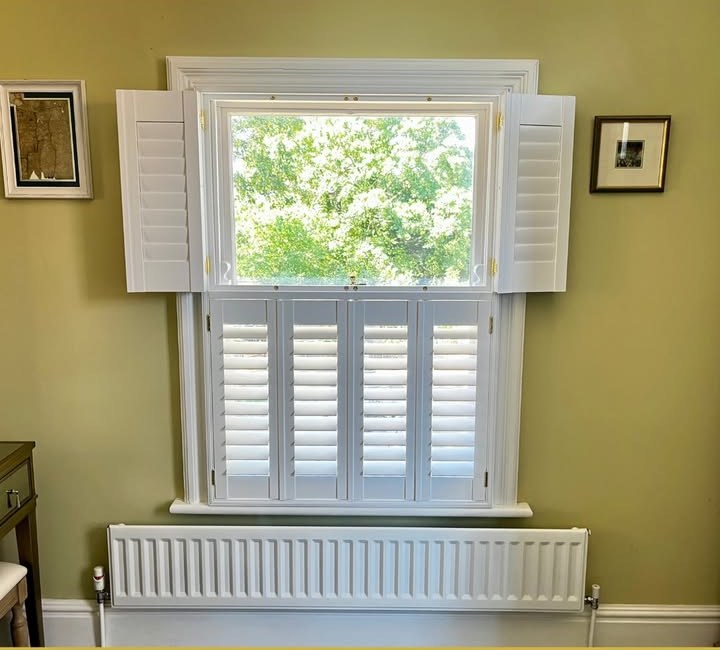
This Leicestershire install keeps the top folded back and the bottom closed. The shutter rail sits on the meeting line of the window, which is the detail that makes tier-on-tier feel right on a sash. More on that job: tier-on-tier shutters in Leicestershire.
Styles That Suit a Sash
| Style | When it suits a sash | Watch-out |
|---|---|---|
| Tier-on-tier | Street-facing rooms, tall sashes, period proportions | Rail height must match the meeting rail |
| Full-height with a midrail | You want one panel set, with separate tilt above and below | The midrail should still land on the meeting rail |
| Café-style | A short sash, or a room that must keep the top glass clear | Can look low on a very tall sash |
| Solid panel | Night privacy and a traditional close, folded back by day | No louvre tilt — darker when shut |
Tier-on-tier
Two independent sets of panels. Open the top for sky and trees. Keep the bottom closed when the pavement or a neighbour is at eye line. This is the layout we specify most often on original sashes, and it is the one that most closely follows the window. Compare it with full-height in our full-height vs tier-on-tier guide.
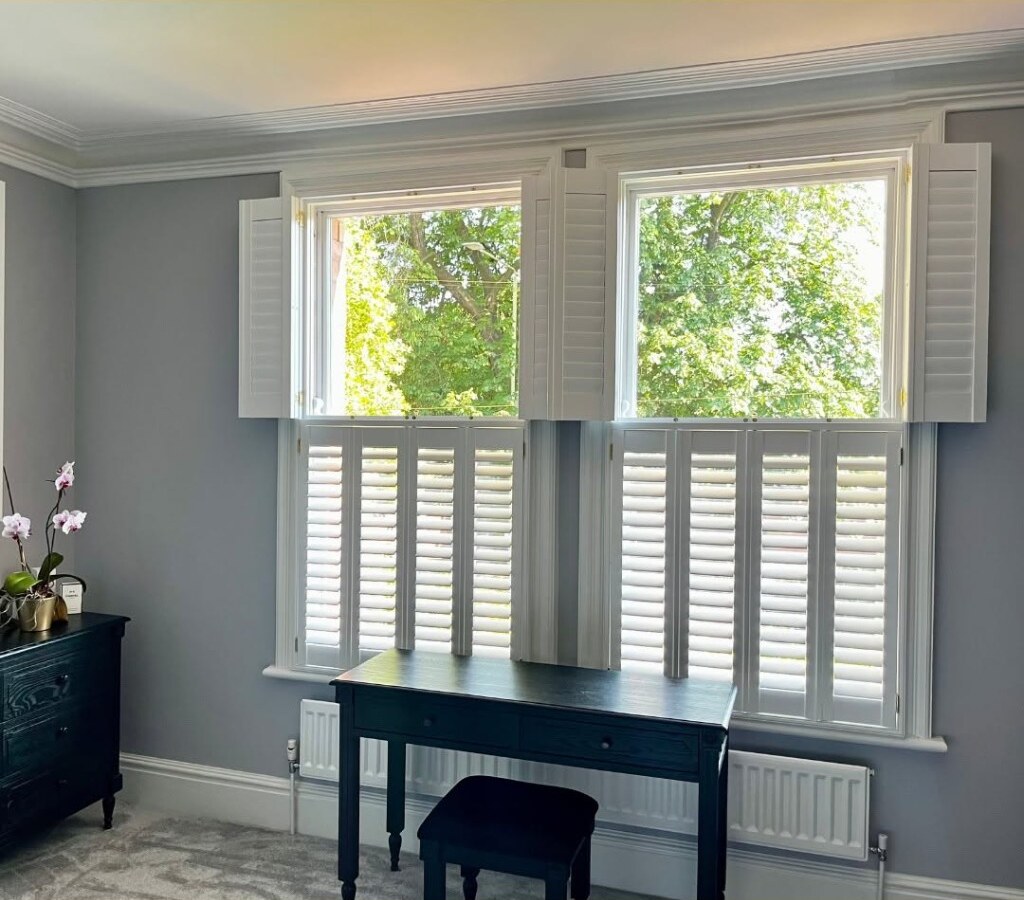
Paired sashes, as in this room, are priced and made as two openings even when they share an architrave. See the paired tier-on-tier install.
Full-height with a midrail
One panel from sill to head, with a midrail so the upper and lower louvres tilt separately. Useful when you want a simpler frame than true tier-on-tier, and you still want the rail on the meeting line. Louvre size matters here: a tall sash can look busy in 47mm and heavy in 114mm. 63mm or 76mm is the usual starting point.
Café-style
Lower panels only. It works on a shorter sash or where you want the upper glass permanently clear. On a full-height Victorian sash it can leave a large bare pane above a low shutter, so we only suggest it when the proportions still look balanced. The café-style shutters page shows where that layout earns its place.
Solid panels
A solid leaf folds back like a traditional internal shutter and gives a darker close than louvres. They suit a period bedroom more than a living room you use all day. Our solid panel shutters guide covers that choice on its own.
Lining the Rail Up
This is the check that separates a sash spec from a standard casement spec.
The meeting rail is the horizontal bar where the two sashes overlap. The shutter rail — the division between upper and lower panels, or the midrail on a full-height set — should land on that line.
When it does:
- The closed shutter still reads as the same window.
- From the street, the division matches the sash rather than cutting across a pane.
- You can open the top half without a louvre or a rail crossing the view oddly.
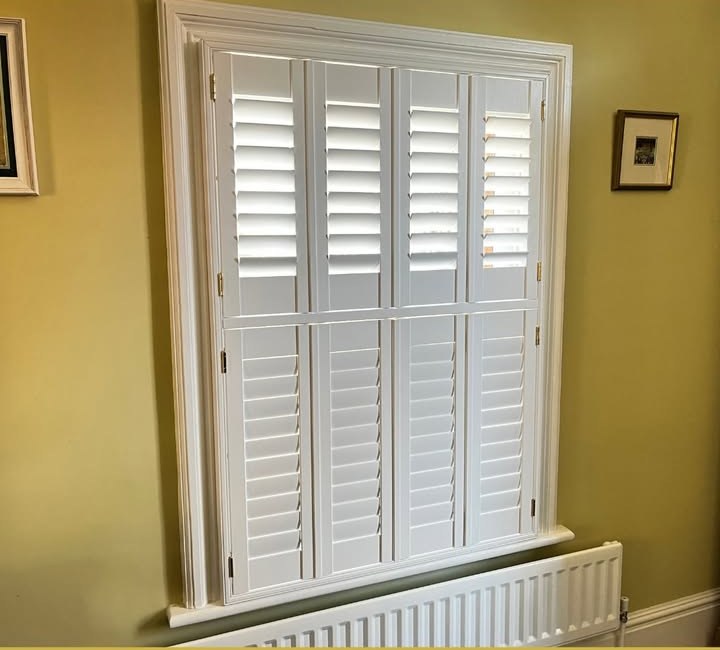
With both tiers closed, the rail is still in the same place. Louvres can sit open for daylight or tilted for privacy. That is a different decision from which style of panel you ordered.
If the meeting rail is unusually high or low, we say so on the survey and agree the rail height with you before manufacture. Guessing it from a photo is how sash shutters end up looking like they belong on a different window.
Materials
Dry living rooms and bedrooms with original timber sashes can take hardwood or a painted finish from our British-made ranges. Faux wood is the practical default where a sash has been replaced in uPVC, or the room is cooler and prone to condensation — north-facing bedrooms and landings included.
MDF is a poor default on an old sash. The reveals are often damp, and a swollen panel is an expensive mistake on a tall opening.
Colour is a separate choice from material. White or off-white usually sits quietly against painted sash joinery. A stronger colour is a finish decision, not a structural one — see how to choose a shutter colour and the colour swatches.
If the sash itself is uPVC rather than timber, the fit is the same idea as any uPVC window: the shutter has its own frame in the reveal, and we do not drill the sealed unit. Our uPVC shutters guide covers handle and recess checks.
What Shutters Will and Will Not Fix
They will:
- Give pavement privacy on the lower sash without a heavy curtain on the window board
- Let you ventilate the top of the window while the bottom stays covered
- Soften the feel of a cold pane and take the rattle out of a curtain track
- Leave the sill clear, which matters when a radiator sits under the window
They will not:
- Repair broken cords, slipped weights or a sash that will not stay up
- Stop draughts from a failed seal or single glazing — that is glazing or a joiner
- Turn louvres into blackout. For sleep, read the bedroom shutters guide and the honest note in our blackout guide
- Replace proper noise control. They take the edge off street noise; they do not soundproof a sash onto a road. See do shutters reduce noise
If the window needs work, do that first. A shutter made to a decaying opening will not sit properly once the frame is repaired.
What We Check on a Survey
- Meeting-rail height — so the shutter rail can line up.
- Reveal depth and squareness — older boxes and plaster lines move.
- Sash travel — catches, cords and the lower sash must still work with the panels folded back.
- Staff bead and window board — so the frame does not pinch the sliding sash.
- How you use the room — street privacy, a garden view, or a bedroom that needs a darker evening.
- Whether the timber is sound — we will tell you if a joiner should go first.
We bring samples, measure every opening, and leave a fitted quote. Photos are useful beforehand. They are not a measure.
Book a Free Home Survey
If you are planning shutters for sash windows in Leicester, Loughborough, Melton Mowbray, Market Harborough or a nearby village, the useful next step is a home visit. We check the meeting rail, the reveal and the sash itself, then talk through tier-on-tier, full-height or solid panel against your own windows.
Frequently AskedQuestions.
Can you fit plantation shutters on sash windows?
What is the best shutter style for a sash window?
Will shutters stop me opening the sash?
How much do sash window shutters cost in the UK?
Do shutters fix a draughty sash?
Are solid panel shutters better than louvres on a sash?
Do you fit sash window shutters in Leicester and Loughborough?
Need advice for your own bedroom windows?Arrange a home visit →