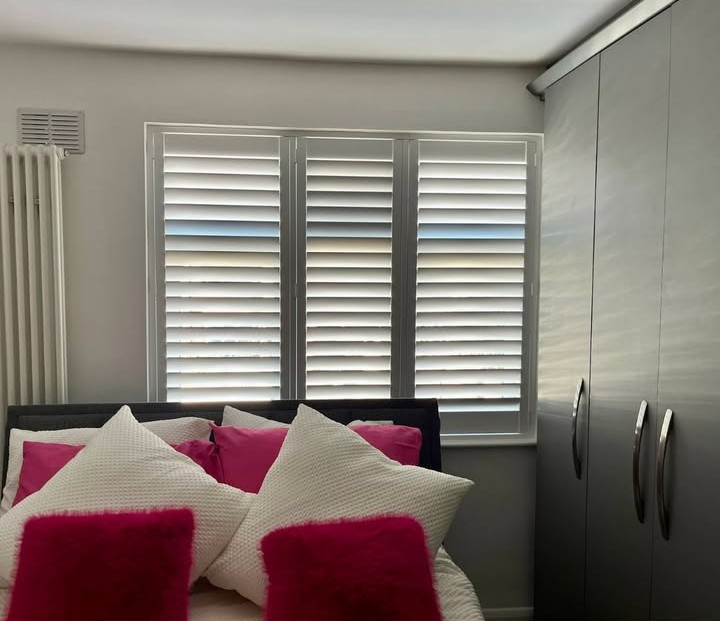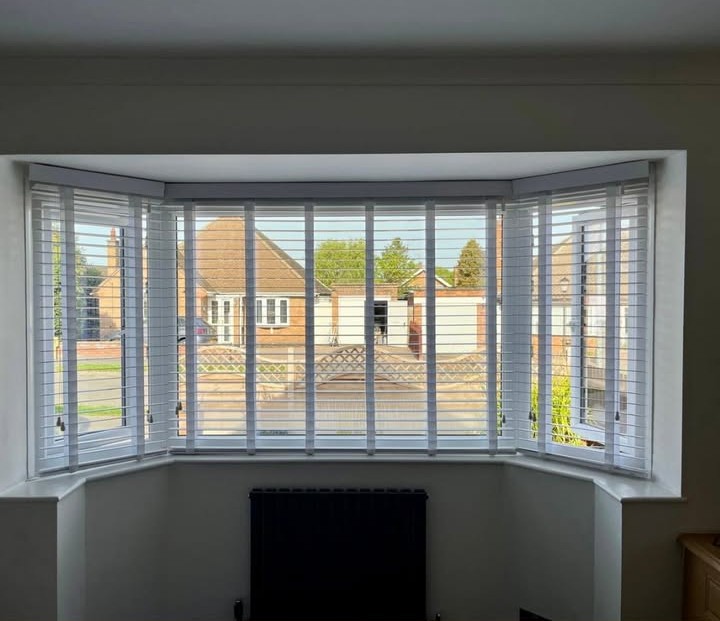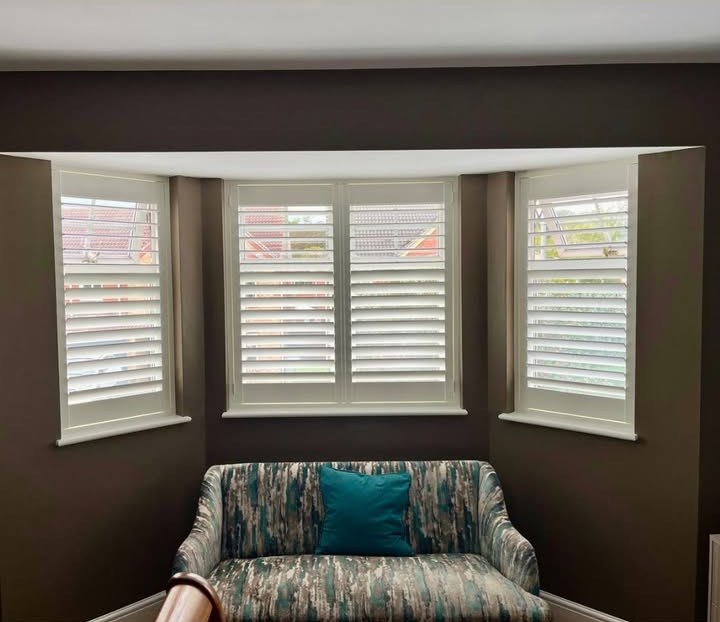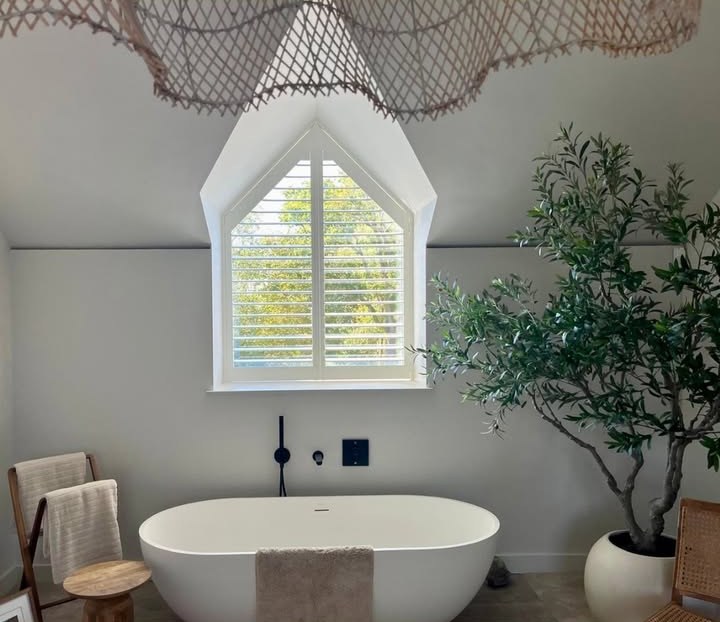
Tier-on-tier shutters split each window into separately hinged upper and lower panels. That classic layout suits many Georgian, Victorian, Edwardian and listed homes: the joinery looks traditional, and you can open the top for a garden view while the bottom stays closed at sofa height.
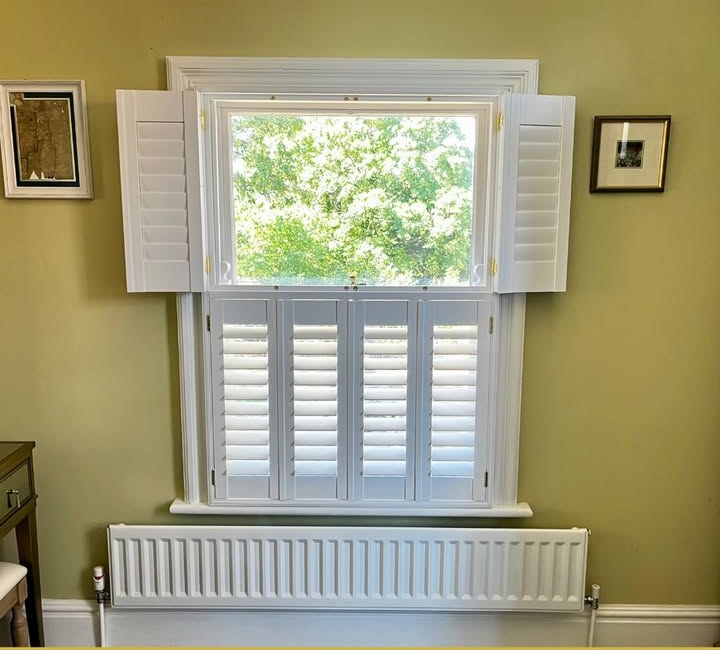
We recently fitted a white tier-on-tier set to a tall period window in Leicestershire — sage walls, white architrave and a radiator under the sill.
How this layout works
Unlike full-height shutters (one leaf from sill to head), tier-on-tier lets you:
- Fold the top fully back for trees and daylight
- Keep the bottom closed for privacy, with louvres open or shut
- Close both tiers and still tweak slat angle for a softer room
If you are still choosing a layout, our guide to full-height vs tier-on-tier walks through the trade-offs.
The install
Top open, bottom closed
Upper panels folded back against the reveal; lower panels closed across the glass. This is the layout most period living rooms actually use during the day.
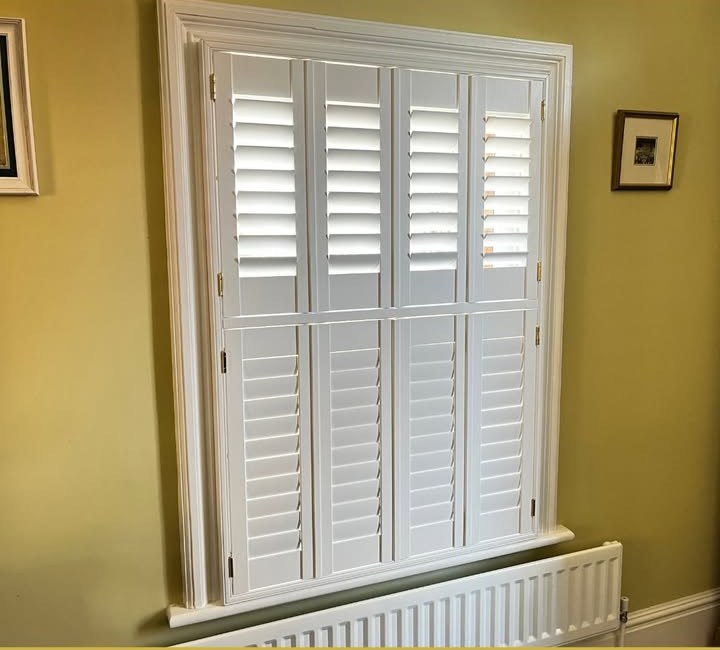
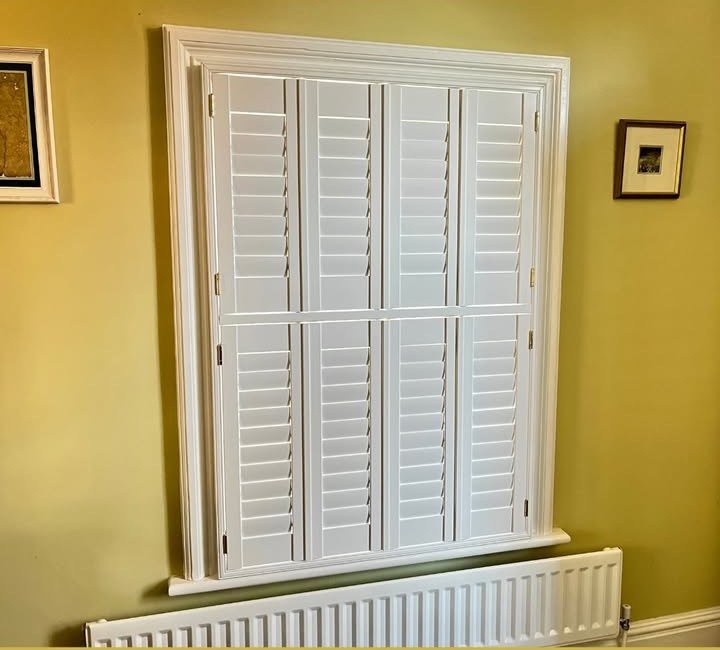
Both tiers closed
With both tiers shut, the window still reads as fitted joinery. Louvres can sit open for daylight or closed for a more solid cover.
Key details:
- White tier-on-tier plantation shutters on a tall period casement
- Independent upper and lower panels
- Clean fit with traditional white moulding and a radiator below
- Measured, manufactured and fitted by our own team
This is a separate job from our earlier paired-window tier-on-tier install.
Thinking about tier-on-tier?
We survey and fit across Leicester, Loughborough, Melton Mowbray and the wider East Midlands. Browse more jobs on Recent Work.
Arrange a free home visit and we will check the window, talk through full-height vs tier-on-tier vs café-style, and leave you with a clear fitted quote.