Last reviewed: October 2026.
Once you have chosen a material and a style, there is one more decision that changes how your shutters look every single day: louvre size. It is the width of each horizontal blade, and it affects how much light and view you get, how the shutter suits the window, and even whether everything clears your window handles.
This guide covers what we recommend on surveys across Leicester, Loughborough and Leicestershire: the five common sizes, which windows suit each one, and the tilt options that go with them.
The Short Answer
- Louvre sizes typically run from 47mm to 114mm. The common sizes are 47mm, 63mm, 76mm, 89mm and 114mm.
- 63mm and 76mm are the all-rounders — they suit most casements, bays and room sizes.
- Go smaller (47mm–63mm) on small, cottage-style or bathroom windows.
- Go wider (89mm–114mm) on large windows and glazed doors where you want the view.
- Closed, all sizes give similar privacy. The difference shows when the louvres are open.
- Check clearance. Wider louvres need more depth behind the panel — we measure this on survey.
What Louvre Size Actually Changes
Light and view
When the louvres are tilted open, wider blades mean fewer louvres and bigger gaps. More daylight comes in and the view outside is less broken up. Smaller louvres give a finer, more traditional pattern with more blades across the window.
Proportion
A louvre size that looks perfect on a tall living-room window can look heavy on a small bathroom window. As a rule, smaller windows suit smaller louvres and larger windows suit wider louvres, so the panel does not end up with only a handful of blades.
Clearance
When louvres tilt open, they project behind the panel towards the glass. Wider louvres project further. On uPVC windows with protruding handles, or in shallow reveals, that can matter. We measure the depth of every reveal and adjust the frame or recommend a smaller louvre so nothing catches. If you have uPVC windows, our guide to fitting shutters on uPVC windows covers this in more detail.
Cost
Wider louvres such as 89mm and 114mm typically cost a little more than standard 63mm. Material, number of panels and window shape have a far bigger effect — see our plantation shutters cost guide for 2026 ranges.
The Five Common Sizes
47mm — small windows and a traditional look
The smallest common size. It gives a fine, detailed pattern that suits small cottage windows, landings and bathrooms, and period homes where a delicate look feels right. On larger windows it can look busy and lets in less view when open. Our cottage window shutters guide covers smaller and older windows.
63mm — the classic all-rounder
The size most people picture when they think of plantation shutters. 63mm works on standard casements in terraces, semis and new builds, on most bays, and in kitchens and bedrooms. It is the safe choice when you want shutters that look right in every room.
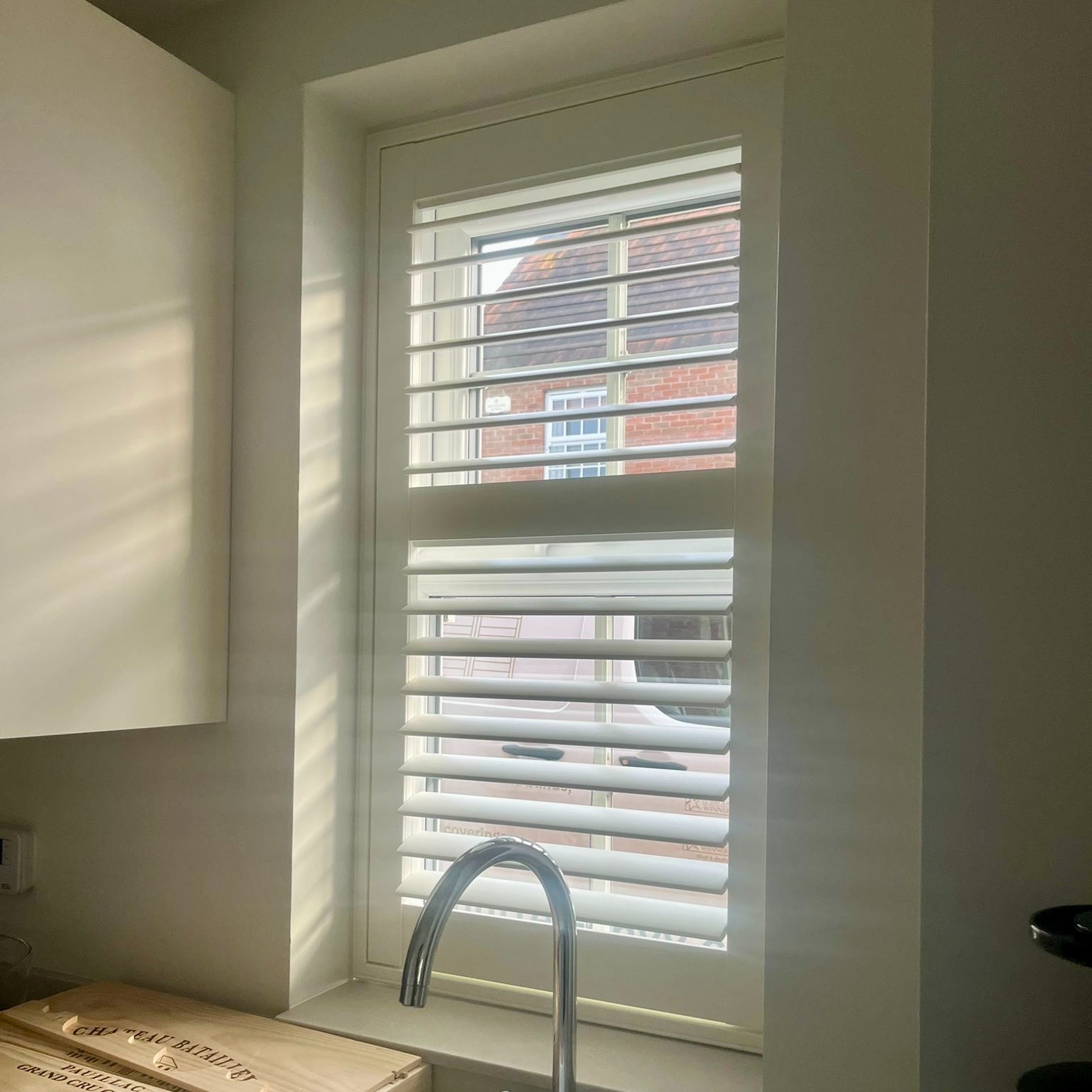
This kitchen in Queniborough uses 63mm louvres in Silk White with a midrail, so the lower louvres can close for privacy at the sink while the top ones stay open.
76mm — a little more contemporary
76mm sits between classic and wide. It opens up more of the view than 63mm without looking oversized, which makes it popular on living-room windows, bays and wider casements. It suits both period and modern homes.
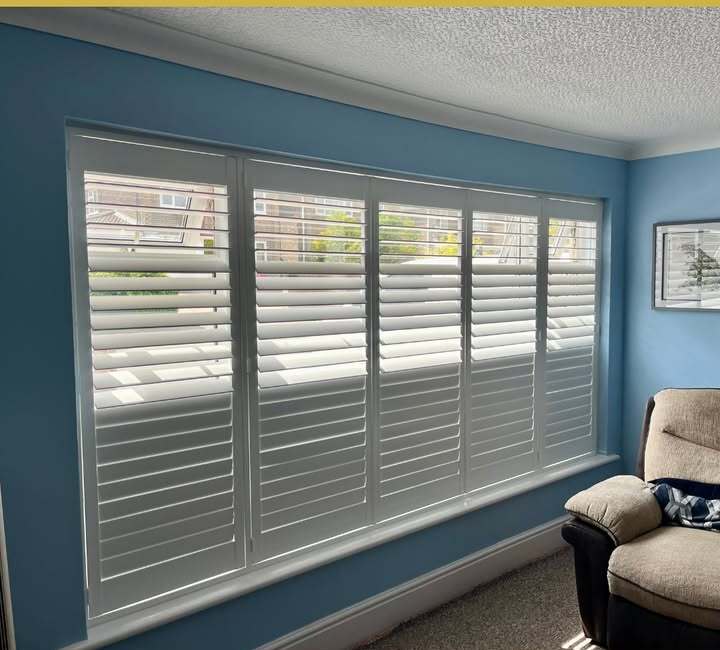
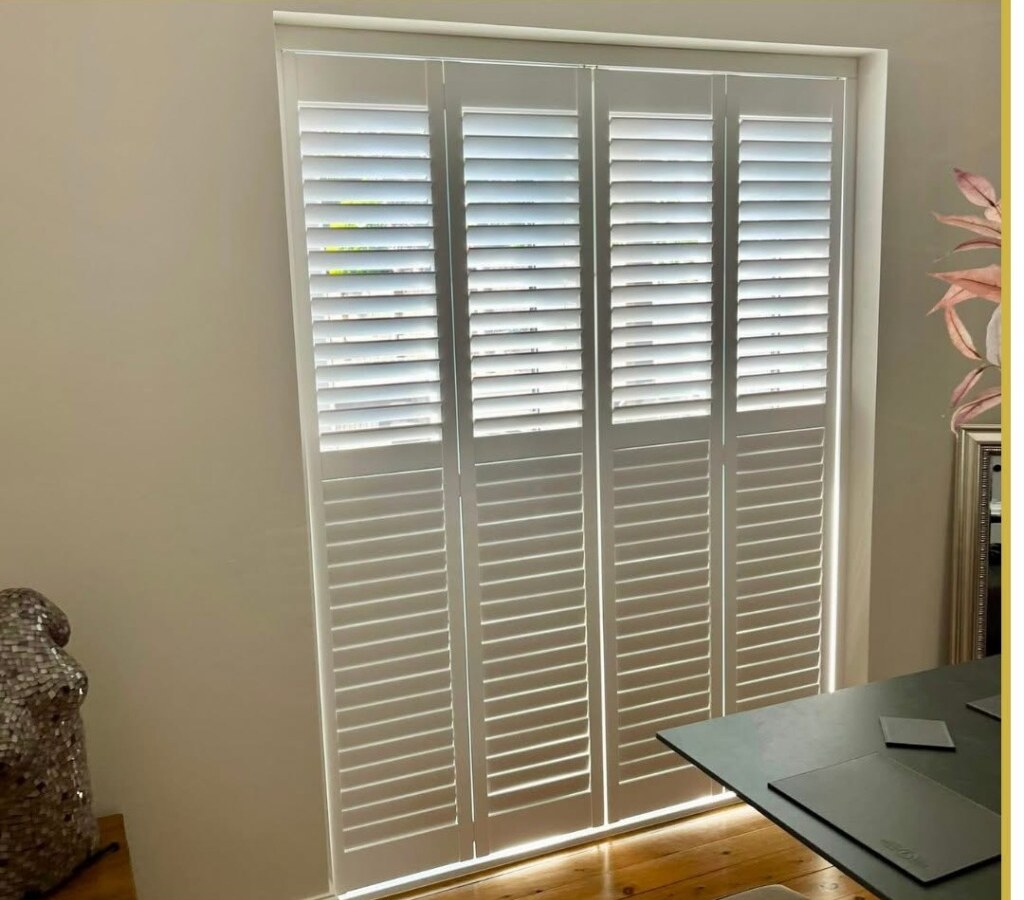
This Langham living room uses 76mm louvres with hidden split tilt — lower louvres closed for privacy, upper louvres open for daylight, and no visible rod. We used the same size on a Boston bay in Loughborough.
89mm — wide windows and views
89mm louvres give a bold, open look with fewer blades. They suit large windows, tall glazing, modern bays and glazed doors, where you want to see out when the louvres are open. Check clearance carefully on windows with deep handles. Our Portchester® aluminium install in Market Harborough used 89mm louvres with silent tilt.
114mm — the widest, for large openings
The widest common size, best kept for very large windows and doors in contemporary rooms. It gives the most open view, but it needs enough depth and panel height to look right, and it is not available in every range or material.
Tilt Rod, Hidden Tilt or Split Tilt?
Louvre size and tilt control are usually chosen together:
- Centre tilt rod — the classic vertical rod on the front of each panel. It moves all the louvres together and gives a traditional plantation look.
- Hidden (silent) tilt — no visible rod. You move the louvres by hand and the mechanism sits in the edge of the panel. Cleaner and more modern, and popular with 76mm and 89mm louvres.
- Split tilt — the top and bottom louvres move independently, usually divided by a midrail lined up with the window’s transom. It gives privacy below and daylight above in a single full-height panel.
If you want separate top and bottom panels that open independently, that is a different style — see full-height vs tier-on-tier shutters and café-style shutters.
Quick Guide by Window
| Window | Louvre sizes that usually suit |
|---|---|
| Small cottage, bathroom or landing window | 47mm or 63mm |
| Standard casement in a terrace, semi or new build | 63mm or 76mm |
| Traditional bay | 63mm or 76mm |
| Large modern bay or tall glazing | 76mm or 89mm |
| French doors, patio doors and large openings | 89mm or 114mm |
These are starting points, not rules. Colour matters too — darker finishes absorb more light, so a slightly wider louvre can help. Our shutter colour guide covers that, and you can browse finishes on our colour swatches page.
Which Sizes Are Available in Which Ranges?
Not every louvre size comes in every material. Our British-made shutter range is available in 63mm, 76mm and 89mm. Faux wood, hardwood and aluminium ranges each have their own options. We confirm exactly what is available for your windows during the survey, and you can see the full range on our shutters page.
What We Check on a Home Survey
- Window size and proportion — so the louvre size suits each opening.
- Reveal depth and handle projection — so louvres can tilt fully open without catching.
- Transom height — so any midrail lines up with the window frame.
- How you use the room — privacy at street level, light in the morning, views to the garden.
- Consistency across the house — matching sizes on the same elevation so the outside looks tidy.
We bring samples to every home visit, so you can compare options against your own windows rather than guessing from photos.
Book a Free Home Survey
If you are planning plantation shutters in Leicester, Loughborough, Melton Mowbray, Market Harborough or nearby villages, the easiest way to choose a louvre size is to see them on your windows. We measure every opening, check clearance and leave you a fitted quote.
Frequently AskedQuestions.
What is the most popular shutter louvre size?
Do bigger shutter louvres let in more light?
Which louvre size is best for a bay window?
Which louvre size is best for small windows?
Do wider louvres cost more?
Will wider louvres hit my window handles?
What is the difference between a tilt rod and hidden tilt?
Do you fit plantation shutters in Leicester and Loughborough?
Need advice for your own bedroom windows?Arrange a home visit →