Last reviewed: September 2026.
A UK conservatory is one of the hardest rooms to dress well. Glass on the walls and roof means winter chill, summer bake, condensation and harsh glare — and the wrong covering fails quickly. Conservatory shutters can transform the side panels and doors when they are made to measure and specified in the right material. They are not a blanket answer for every pane of glass.
This guide covers what we recommend on surveys across Leicester, Loughborough and Leicestershire: where shutters work, when aluminium beats faux wood, realistic 2026 costs, and when made-to-measure blinds are the smarter call.
The Short Answer
- Yes for many vertical side panels and doors — if the reveal and door stack allow a proper frame.
- No for the roof — shutters do not cover conservatory roof glazing; use roof blinds or other shade.
- Aluminium plantation shutters are usually the safest material for heat and humidity.
- Faux wood can work on milder side elevations; wood and MDF are poor defaults in a baking conservatory.
- Louvres cut glare and wall-level heat — they do not stop roof solar gain on their own.
- Expect roughly £1,200–£8,000+ fitted depending on how much of the glaze-out you cover and whether you choose aluminium.
- We will say no if shutters will not fit or last — that honesty is part of the survey.
Why Conservatories Punish the Wrong Covering
A living room bay in a brick house sits behind insulated walls. A conservatory is mostly glass. Typical Leicestershire issues we see:
- Temperature swing — cold mornings, 35–40°C+ on a clear summer afternoon
- Condensation — night cooling on large glass areas softens or warps the wrong materials
- UV fade and glare — furniture, flooring and eyes take the hit without side control
- Door stacks — French doors, bifolds and patio doors need panels that clear handles and fold or track correctly
- Roof vs wall — covering the sides helps; the roof still needs its own plan
That is why a conservatory quote is survey-led. Catalogue “room packs” ignore how your glass faces the sun.
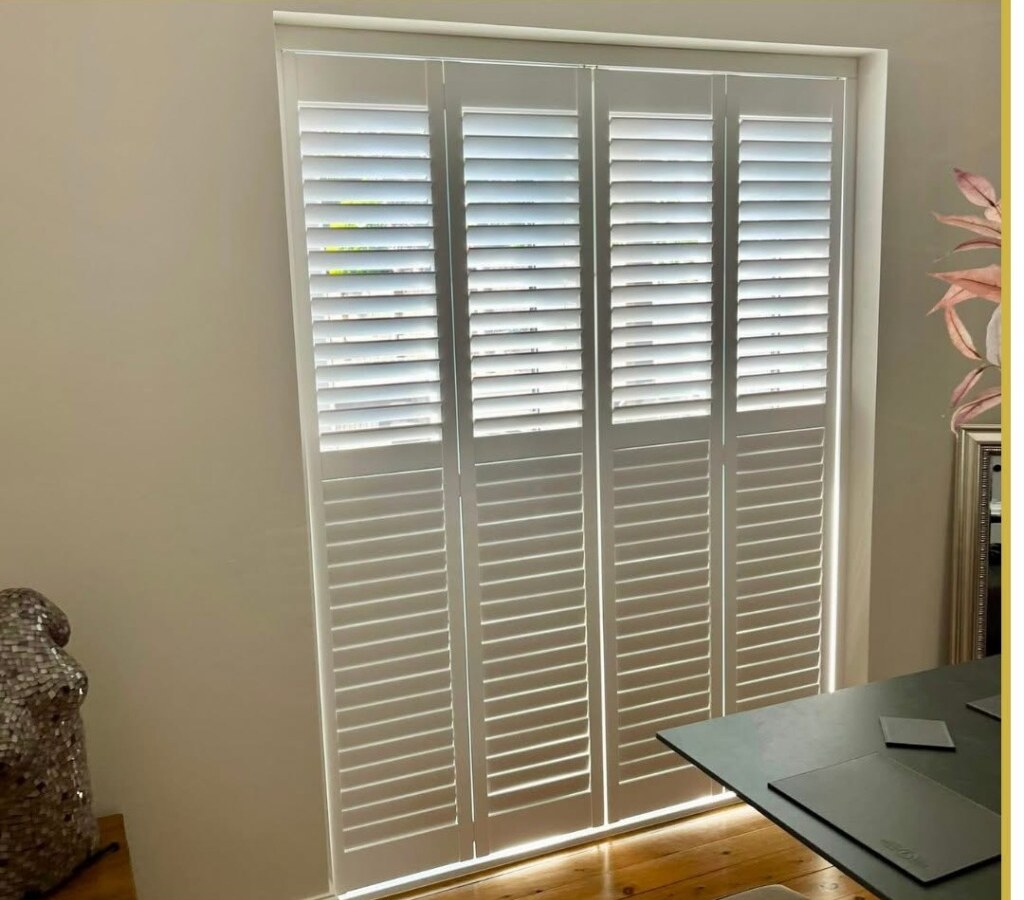
Where Shutters Work (and Where They Don’t)
Side panels and French / bifold doors — usually yes
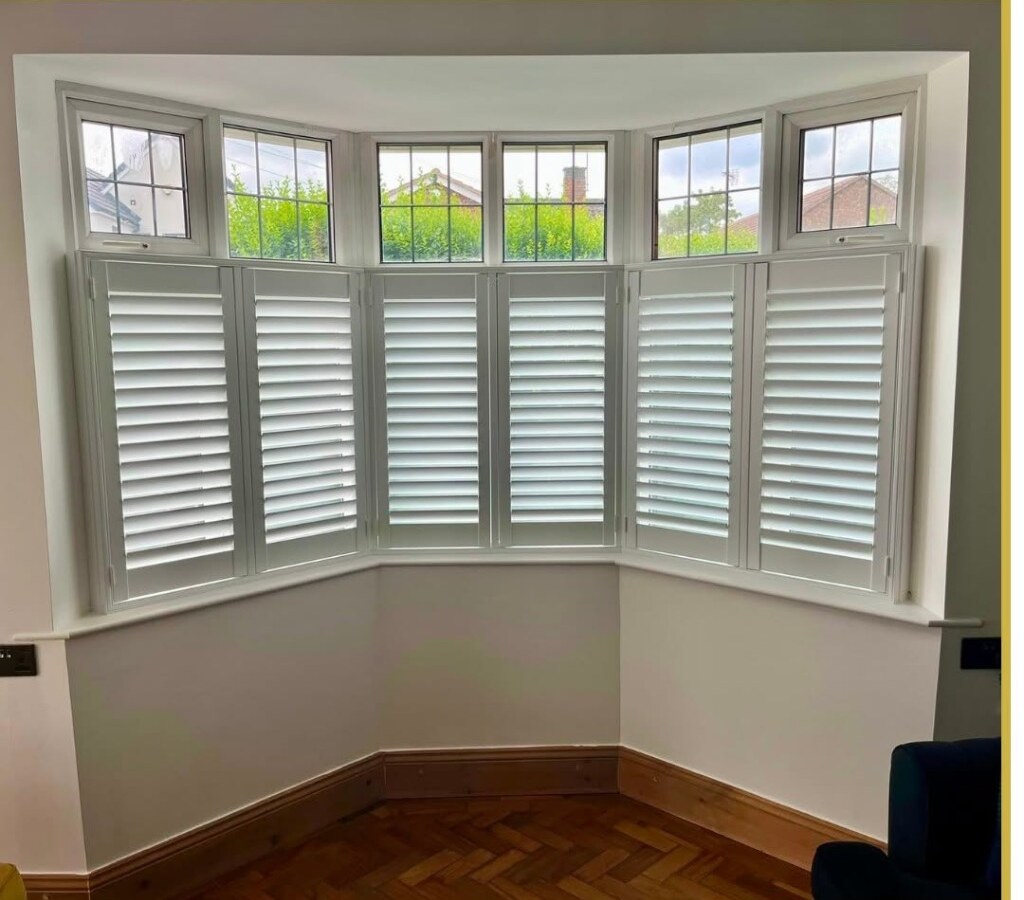
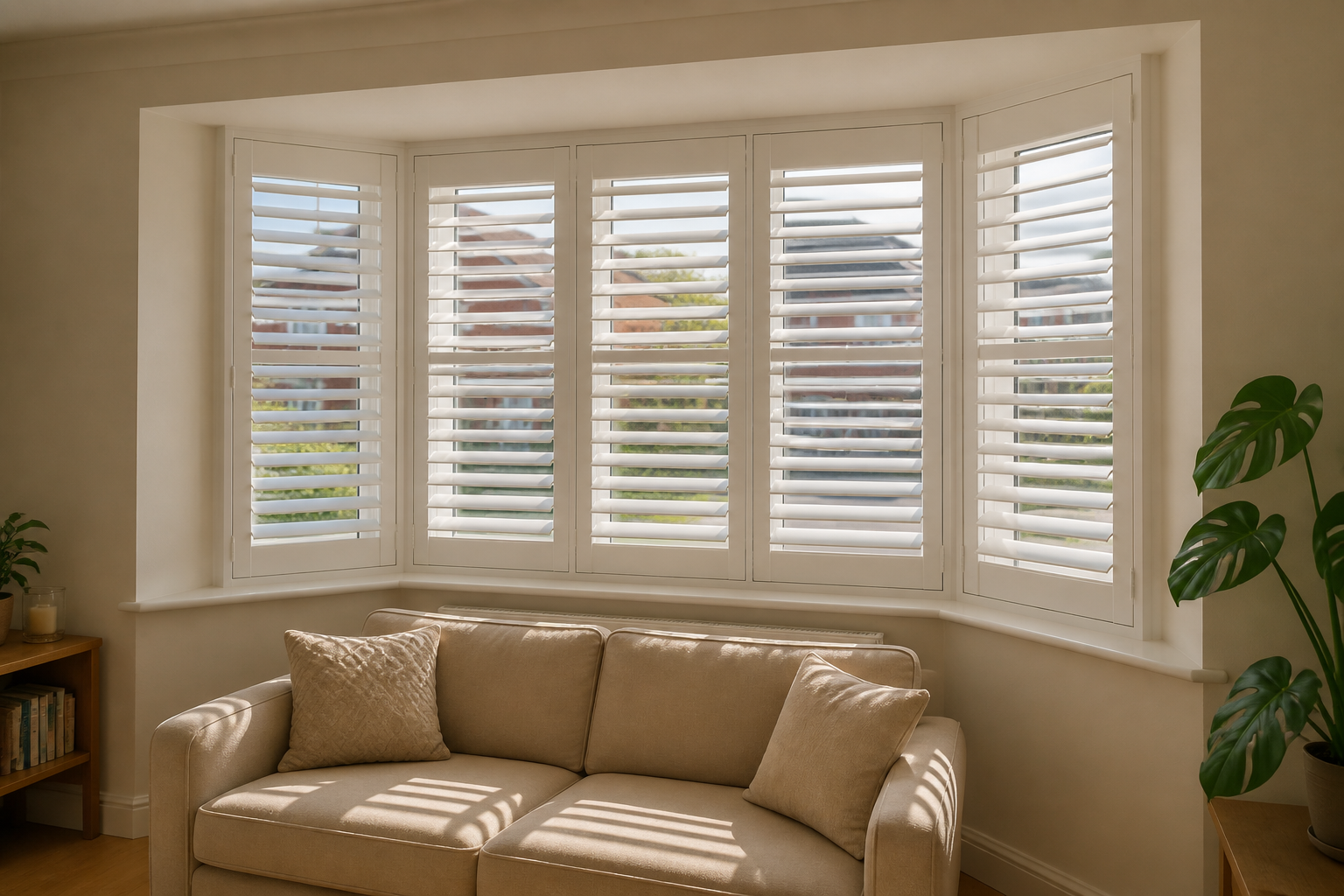
Full-height or multi-panel shutters on the vertical glass are the core conservatory use case. They give privacy from neighbouring gardens, control afternoon glare, and look fitted rather than draped. For wide door runs, see how we approach bi-folding door shutters and plantation shutters for French doors.
Shallow or awkward frames — maybe not
Some uPVC conservatory systems have very shallow reveals, protruding handles or stacked doors that leave no clean path for a shutter frame. In those cases we may recommend Perfect Fit or other blinds instead of forcing panels that will foul or look chunky. That is the same honesty behind reviews where homeowners were advised not to put shutters in a conservatory.
Roof glass — no shutters
Roof panes need dedicated roof blinds, films, external shade or better ventilation. Side shutters still help the room feel usable; they are not a roof solution. Outdoor awnings can cut patio and glass heat load from outside when the elevation allows.

Materials for Conservatory Shutters
| Material | Conservatory verdict | Best used |
|---|---|---|
| Aluminium plantation | Best default for harsh glaze-outs | South-facing sides, door runs, high humidity, long-term stability |
| Faux wood / PVC composite | Good on milder elevations | North or shaded sides; lighter heat load; wipe-clean living |
| Hardwood | Usually avoid | Dry rooms elsewhere in the house — not baking glass boxes |
| MDF | Avoid | Fails with moisture and heat swings |
For the wider aluminium case (security, south rooms, cost bands), read Are aluminium shutters worth it? and the Portchester aluminium product page. Many homes mix materials: aluminium in the conservatory, faux wood in dry bedrooms.
Heat, Glare and Privacy — What Shutters Actually Do
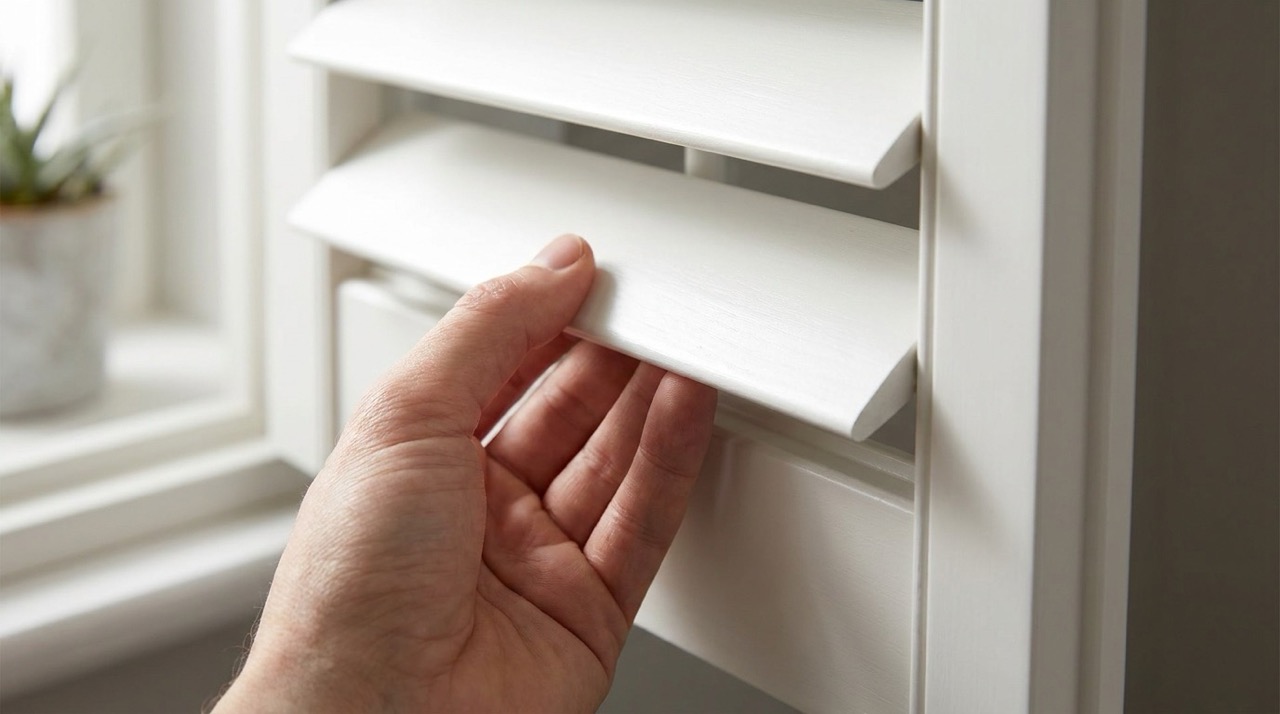
Glare: Closing or angling louvres on the sun-facing wall makes screens and seating usable again.
Privacy: Full-height panels beat net curtains on garden-facing glass, especially after dark when the conservatory becomes a lit box.
Heat: Wall-level solar gain drops when louvres are closed. Roof gain does not. Combine with roof blinds, trickle vents, fans or an external awning if summer comfort is the priority — see also summer shade ideas.
Insulation feel: Shutters add a still-air layer at the glass, which helps on cold evenings; they are not a substitute for upgraded roof or wall glass.
Styles We Spec Most Often
Full-height with mid-rail
One panel height, mid-rail for independent upper/lower louvre tilt. Clean look on side walls and many French door sets.
Multi-panel door runs
Matched panels across patio or bifold openings so the shutters read as architecture, not add-ons. Track or hinged layouts depend on how the doors open.
Café-style (less common here)
Lower panels only can work on a side elevation where you want garden view above eye line. In a fully glazed conservatory, full-height is usually more useful for evening privacy. Café options are covered on our café-style shutters hub.
Compare layouts more broadly in full-height vs tier-on-tier.
What We Check on a Conservatory Survey
- Orientation — which elevations bake, which stay mild
- Reveal depth and frame type — room for a shutter frame without fouling glass or seals
- Door and handle geometry — especially bifolds and French doors
- Material against heat and condensation — aluminium vs faux wood call
- Roof plan — blinds or other shade so expectations are realistic
- Budget vs coverage — sides only, doors only, or full vertical glaze-out
For uPVC frames in general, see Can you fit shutters on uPVC windows?. For how we work from visit to fit, see the Shutter Envy process.
2026 Cost Guide for Conservatory Shutters
Prices vary by panel count, material and door complexity. As a planning aid for Leicestershire homes:
- Two or three side panels, mid-range faux wood: often about £1,200–£2,500 fitted
- Door run + matching sides, mid-range: often about £2,000–£4,500 fitted
- Aluminium full vertical glaze-out: commonly £3,500–£8,000+ depending on size
- Roof blinds as a companion quote: separate line — ask on the same visit
Wider UK shutter price context sits in our plantation shutters cost guide and local notes in shutters in Leicester: prices, timelines and quote checklist.
When Blinds Are the Better Conservatory Choice
Shutters are not automatic. Choose blinds (or a mix) when:
- The roof is the main overheating problem and sides are secondary
- Reveals are too shallow for a shutter frame
- Door stacks leave no clean hinge or track path
- Budget only covers roof control first
- You want motorised daylight scenes across a large glazed box (motorised blinds guide)
Compare trade-offs in shutters vs blinds. We will recommend the product that lasts in your glass box, not the one that is easiest to sell.
Next Step
If your conservatory is too bright, too hot or too exposed, a home visit is the fastest way to an honest fitted plan — shutters on the sides, blinds on the roof, or blinds throughout when that is the right call. Shutter Envy surveys and installs across Leicester, Loughborough and Leicestershire.
Book a free survey and quote — photos help, but we still measure on site.
Frequently AskedQuestions.
Can you put plantation shutters in a conservatory?
What is the best shutter material for a conservatory?
Do conservatory shutters keep the room cooler?
How much do conservatory shutters cost in the UK?
Why might a specialist advise against shutters in a conservatory?
Are shutters better than blinds in a conservatory?
Do you fit conservatory shutters in Leicester and Loughborough?
Need advice for your own bedroom windows?Arrange a home visit →