Last reviewed: June 2026 by the Shutter Envy survey team.
If you live on a busy road in Leicester, near the A6 in Loughborough, or in a Victorian terrace where the front bay faces the pavement, you’ve probably asked whether plantation shutters can quiet the room down. The short answer: yes, noticeably — but no, not completely.
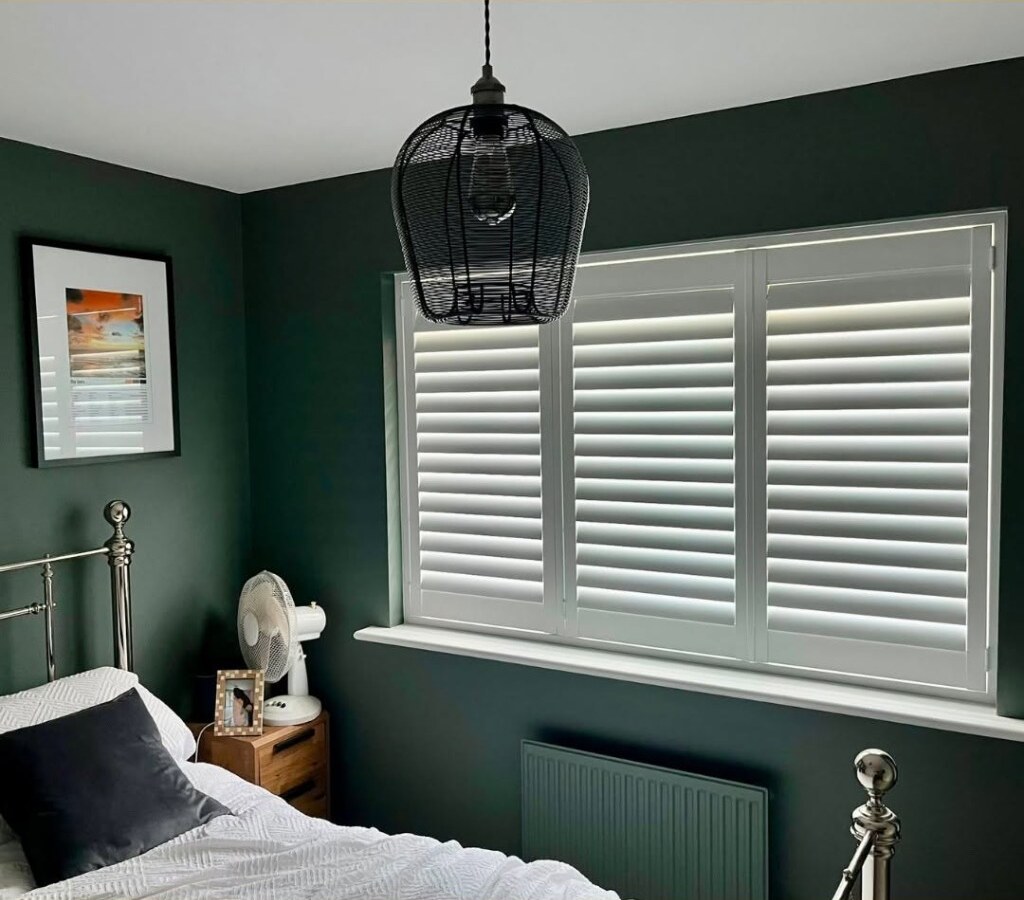
Shutters are not soundproofing. They will not silence the A46 at rush hour. What they do well is add mass, tighten the fit around the glass, and cut the mid-frequency sounds that wreck sleep — traffic hum, voices, dogs, delivery vans. This guide explains what UK homeowners can realistically expect in 2026, which shutter styles and materials perform best, and when you need shutters plus something else.
For a lighter introduction, see how shutters help reduce street noise. For a direct comparison with blackout blinds, see shutters vs blackout blinds for noise.
The Short Answer
- Shutters dampen noise — they do not block it entirely. Expect a meaningful reduction in everyday street sounds, not silence.
- Fit quality matters more than brand. A millimetre-perfect frame with minimal gaps outperforms a loose-fitting “premium” shutter every time.
- Solid-panel shutters are best for maximum dampening. Closed louvres on full-height shutters are the practical sweet spot for most homes.
- Faux wood performs nearly as well as real wood for road noise. Material choice matters less than style and installation.
- Layered solutions win for shift workers and light sleepers: shutters plus a fitted blackout honeycomb blind behind the frame.
- Glazing still does the heavy lifting on single-glazed or draughty windows. Shutters are the best window dressing for noise — not a replacement for glass.
Why Shutters Help (And What They Cannot Fix)
Sound travels through air gaps and vibrating surfaces. Thin curtains flutter. Roller blinds leave side channels. Even well-made curtains rarely seal the window reveal the way a fitted shutter frame does.
Plantation shutters help because:
- Mass — shutter panels are solid boards (MDF, faux wood or hardwood), not lightweight fabric.
- Rigid fit — the frame is custom-made to your reveal; panels close against it without rattling when a lorry passes.
- Secondary air gap — a trapped layer of air between shutter and glass acts as a basic insulator, the same principle as double glazing.
- Vibration damping — rigid panels absorb window vibration rather than transferring it into the room like loose fabric.
What shutters cannot fix:
- Low-frequency bass from heavy traffic — that travels through walls and glass regardless.
- Party-wall noise from neighbours — wrong tool entirely.
- Single-glazed windows — shutters improve the situation but cannot overcome thin glass. Upgrade glazing if that’s the root cause.
Best Shutter Styles for Noise Reduction
Not all styles perform equally. Ranked from most to least effective for noise:
1. Solid-panel shutters
No louvres means no gaps. Solid panels are the best-performing shutter style for noise — and the most light-blocking. They suit bedrooms, nurseries and home offices on genuinely noisy streets. The trade-off is you lose adjustable louvres: it’s open or closed.
2. Full-height louvred shutters (louvres closed)
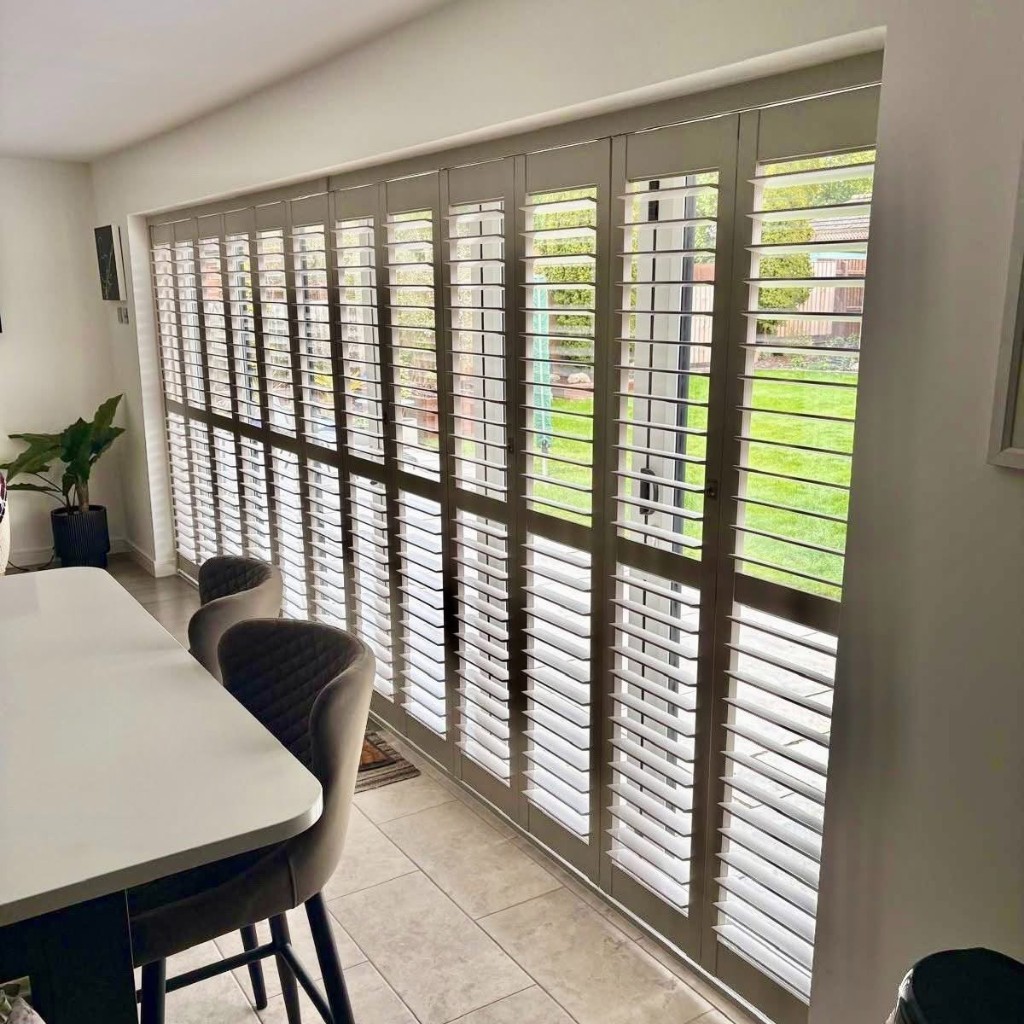
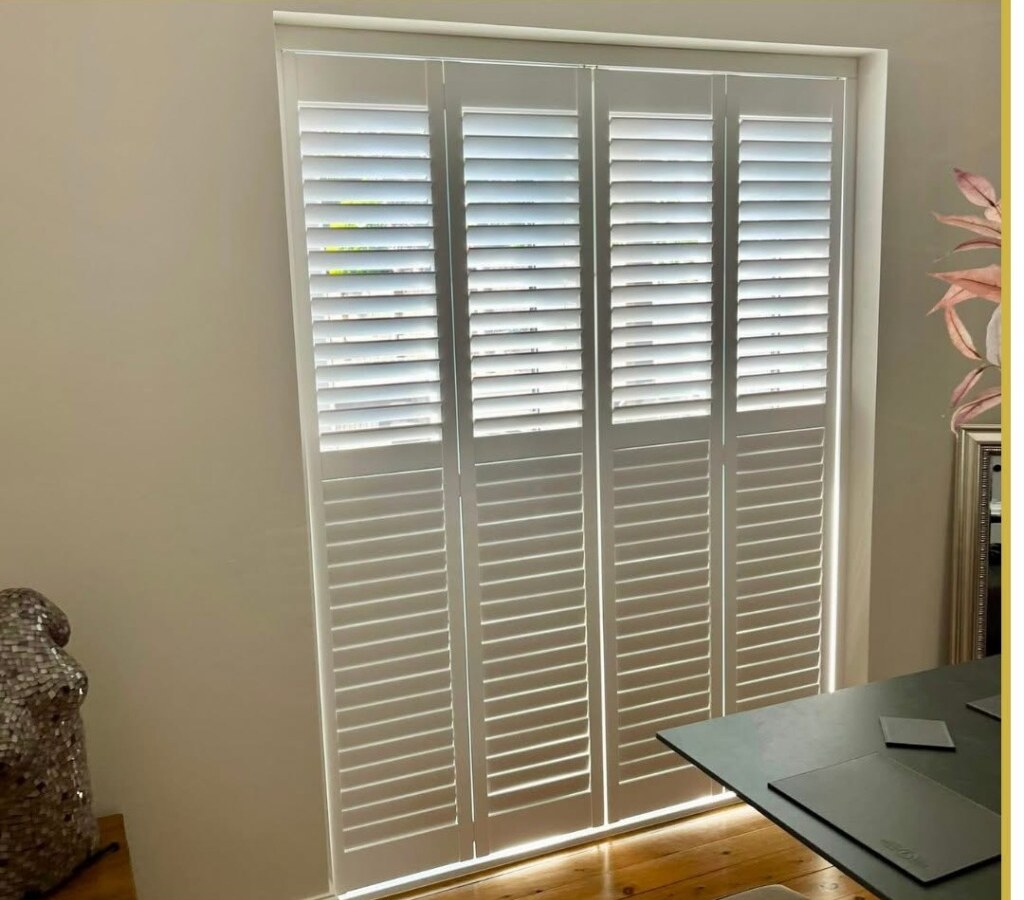
This is what most Leicestershire homeowners choose. With louvres fully closed, you get a strong barrier plus the flexibility to tilt open during the day. On a street-facing bay, keep them closed at night and partially open in the morning.
3. Tier-on-tier shutters
Excellent for balancing privacy and daylight — but only when both tiers are closed do you get full noise benefit. The upper tier open / lower tier closed configuration is perfect for daytime privacy on a bay, but it leaves the top half of the glass exposed to sound. Fine for moderate noise; less ideal for a main road.
For the full style comparison, see full-height vs tier-on-tier shutters.
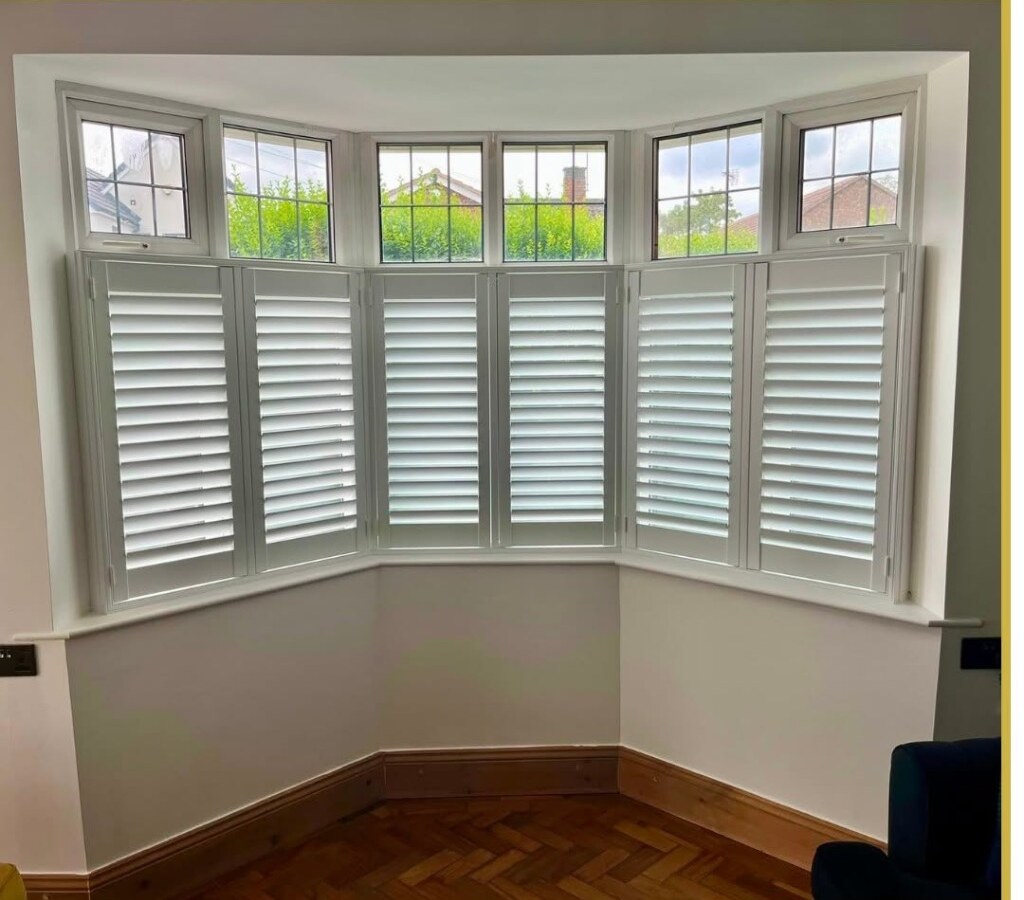
4. Café-style shutters
Cover the lower half only. Good for privacy at sofa height on a bay, but the exposed upper glass lets sound in freely. Not our first recommendation for a noisy street-facing room. See café-style shutters for where they work best.
Material and Density: Does It Matter?
For road noise, material matters less than most salespeople claim — but it is not irrelevant.
| Material | Noise performance | Best for |
|---|---|---|
| Solid-panel (any material) | Best louvred alternative | Noisy bedrooms, nurseries |
| Real wood | Excellent — densest board | Period homes, premium finish |
| Faux wood | Excellent — near-equivalent to wood | Most UK street-facing rooms |
| MDF | Good in moderate noise | Quiet streets, tight budgets |
| Aluminium | Good — rigid and secure | Ground-floor security openings |
If you are on a genuinely busy road, we would steer you away from MDF towards faux wood or real wood — not because MDF is useless, but because the denser boards dampen vibration slightly better and last longer under daily opening and closing. See our MDF shutters verdict for the full honesty on where MDF belongs.
Shutters vs Curtains vs Blinds for Noise
Curtains: Only help meaningfully if they are heavy, lined, and cover the full stack width with minimal side gap. Most UK living rooms have lighter curtains that look good but do little for sound.
Roller and Roman blinds: Fabric over a window — better than nothing, but they lack mass and often rattle in the channel when a gust or vibration hits.
Honeycomb (cellular) blinds: The air pockets trap some sound. Good for light sleepers when paired with shutters — not a standalone solution on a main road.
Plantation shutters: Rigid, fitted, dense. The best single window dressing for noise reduction in a typical UK home.
For the full blinds comparison, see shutters vs blackout blinds for sleep and noise.
The Layered Approach: Shutters Plus Blackout Blind
For bedrooms where both darkness and quiet matter — shift workers, nurseries, front bays on Narborough Road or Leicester’s London Road — the strongest setup we fit is shutters with an integrated blackout honeycomb blind behind the frame.
Three barriers instead of one:
- Glass — your existing glazing.
- Blackout honeycomb blind — traps air, blocks light, adds a fabric mass layer.
- Plantation shutters — rigid outer barrier, privacy and tilt control by day.
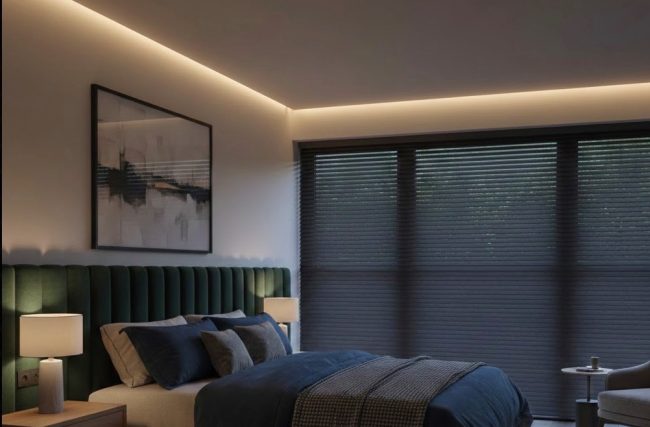
This is the same principle as our bedroom blackout shutter guide — shutters alone are room-darkening; the blind layer gets you closer to true blackout and adds measurable noise benefit. Browse our blinds range or ask Mark about the Shutter and Shade combination on survey.
Room-by-Room Recommendations
Front bedroom on a busy road
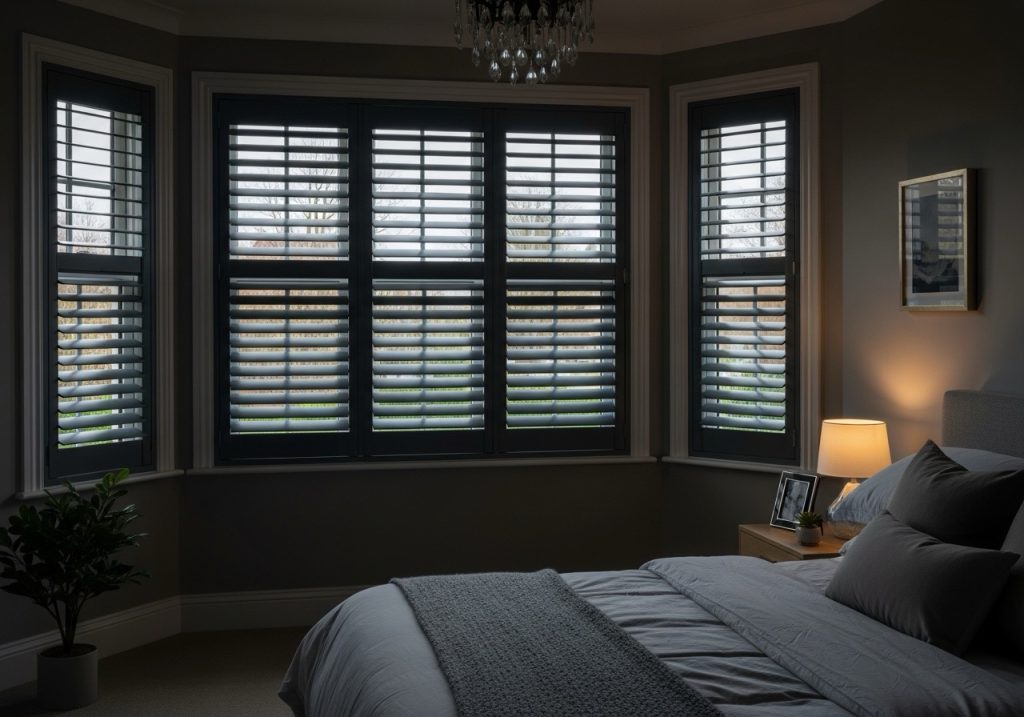
Full-height or tier-on-tier faux wood shutters, louvres closed at night. Add a honeycomb blind if you are a light sleeper. Priority: fit quality and closing every gap in the reveal.
Street-facing living room bay
Tier-on-tier is the most popular choice — upper tier open for daylight, lower closed for privacy. Accept that daytime noise will be higher with the top open; close both tiers for evening TV.
Nursery
Solid-panel or full-height with integrated blackout blind. Parents notice the difference on nap times within the first week — less from decibels on a meter, more from the room feeling calmer.
Home office on a school route
Full-height louvred shutters, kept closed during calls. Faux wood is plenty; the rigidity matters more than the species.
Rear-facing quiet room
Noise is rarely the driver here. Choose style for light and privacy instead. MDF is fine in a quiet rear bedroom.
Leicestershire Context: Where Noise Is a Real Buying Factor
We survey homes across the county where noise is the primary reason for the enquiry — not just aesthetics:
- Victorian terraces in Clarendon Park, Stoneygate and the Golden Mile — front bays metres from the pavement.
- A6 corridor properties in Loughborough, Quorn and Mountsorrel — steady traffic hum day and night.
- Market Harborough and Melton Mowbray town-centre flats — delivery vans and late-night footfall.
- New-build estates near the A46 and M1 — double glazing helps, but rear-facing patios still pick up road drone.
In all of these, shutters are the first window treatment we recommend when the homeowner’s brief includes “quieter.” They are not the last word if the glazing itself is the weak point — but they are the best dressed solution that also solves privacy and light.
What to Ask on Survey
If noise is your main concern, tell the surveyor upfront. Useful questions:
- Which style gives me the best noise performance in this room?
- Is solid-panel worth the trade-off in light control?
- Would a honeycomb blind behind the shutter frame help here?
- Are my windows the weak point — should I budget for glazing too?
- How will tier-on-tier perform if I keep the upper tier open during the day?
Mark measures every reveal, checks frame condition, and recommends based on how the room actually performs — not a one-style-fits-all answer.
Book a Free Home Survey
The only way to know how much difference shutters will make in your room is to stand in it with someone who fits them every week. We bring physical samples, listen to the street from your bay, and give you a clear recommendation — shutters only, or shutters plus a blind layer — with a no-obligation fitted price on the day.
Book your free home survey → or call 07729 572277.
For broader pricing context, see our plantation shutters cost guide. For bay-specific costs, see the bay window shutters cost guide.
Frequently AskedQuestions.
Do plantation shutters block out road noise?
Which shutter style is best for noise reduction?
Are shutters better than curtains for noise?
How much noise do shutters actually reduce?
Do faux wood shutters reduce noise as well as real wood?
Will shutters help with noisy neighbours?
Should I upgrade my glazing or fit shutters first?
Need advice for your own bedroom windows?Arrange a home visit →