Last reviewed: July 2026.
Choosing between wooden and faux wood plantation shutters is the decision we walk through on almost every survey. This is the honest side-by-side for UK homeowners in 2026 — looks, lifespan, moisture, price per window, and which rooms suit which material.
At a Glance
| Hardwood | Faux wood | |
|---|---|---|
| Look | Timber grain (especially stained) | Painted timber look — hard to tell apart in white/neutrals |
| Best rooms | Dry living rooms, bedrooms, studies | Kitchens, bathrooms, family rooms, most whole-house jobs |
| Moisture | Avoid steamy rooms | Handles everyday humidity well |
| Typical 2026 fitted price | £300–£600 per standard window | £150–£350 per standard window |
| Lifespan | Decades in the right room | Commonly 15–20 years when well fitted |
| Maintenance | Light care; keep dry | Wipe-clean |
Short verdict: choose wood when the room stays dry and you want timber character. Choose faux wood when you want the plantation look with less risk and less cost — which is most Leicestershire homes.
What Are Wooden Shutters?
Wooden shutters are made from natural hardwoods such as basswood or poplar. They offer a warm, premium feel, take stains as well as paint, and bring genuine timber character to a room. No two stained panels are identical.
They belong in dry spaces. Humidity, condensation and splash zones are where wood starts to lose its advantage.
What Are Faux Wood Shutters?
Faux wood shutters are engineered PVC or composite panels finished to look like painted timber. Once fitted, most visitors will not spot the difference at conversational distance — especially in white, soft grey or silk finishes.
They resist warping and moisture far better than timber or MDF, wipe clean, and suit busy family homes. For a deeper durability read, see are faux wood shutters any good?.
Appearance
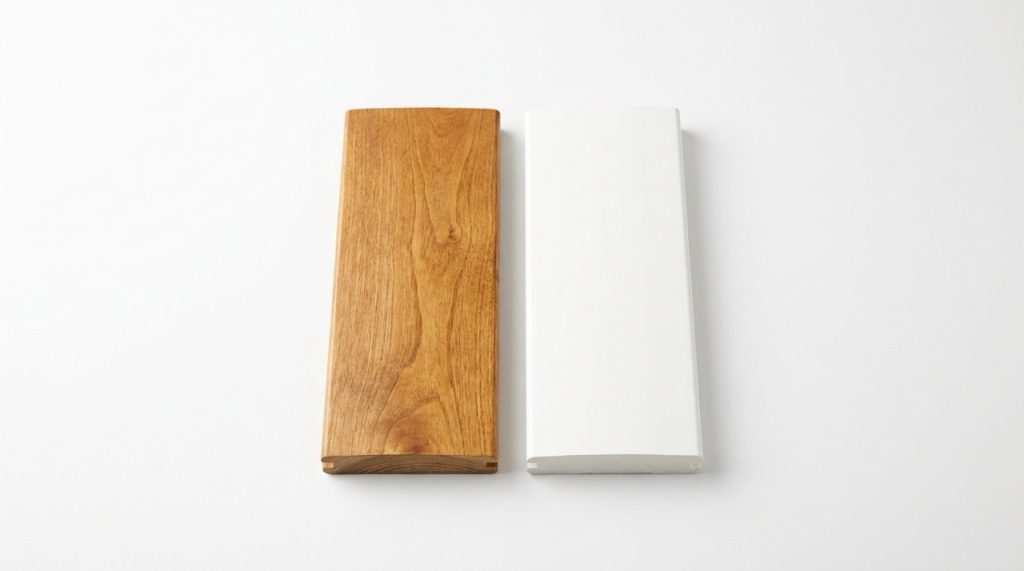
- Wood: Natural grain and depth — especially when stained. The premium “timber” look.
- Faux wood: Excellent painted match. Not the right choice if you insist on a stained grain finish.
Durability & lifespan
- Wood: Can last decades in a dry room. Humidity and poor ventilation shorten that story.
- Faux wood: Tough day-to-day; typically 15–20 years when fitted well. Moisture is not the enemy it is for timber or MDF.
Considering the budget option? Read our honest MDF shutters verdict — MDF is fine in some dry rooms and wrong in others.
Cost (2026 UK guide)
Prices below assume a standard casement, mid-range finish and professional fitting:
- Faux wood: about £150–£350 per window fitted
- Hardwood: about £300–£600 per window fitted
Bays, shaped windows and premium colours cost more. Fuller ranges: plantation shutters cost guide.
Faux wood is not “cheap looking” when it is made-to-measure and fitted properly. It is simply the value choice for most openings.
Where to Use Each Type
We often recommend hardwood for dry living rooms, bedrooms and home offices when the budget allows and the look matters.
For kitchens, bathrooms, utility rooms and high-traffic family spaces, faux wood is the practical hero. Many homes mix both — hardwood on a feature lounge, faux wood everywhere moisture or kids appear.
Also useful:
- Café-style shutters for street-facing lower privacy
- Arched window shutters for shaped glass
- Complete UK plantation shutters guide
Still Unsure? We Can Help
During a free home survey we bring physical samples of wood and faux wood, assess each room, and quote both options where it genuinely makes sense — across Leicester, Loughborough, Melton Mowbray, Market Harborough and the wider East Midlands.
Frequently AskedQuestions.
Are faux wood shutters any good?
Are wood shutters better than faux wood?
How long do faux wood shutters last?
Are faux wood shutters expensive?
Which should I choose for a kitchen or bathroom?
Need advice for your own bedroom windows?Arrange a home visit →